Surgery for animals is a service that forms part of our comprehensive medical care for your pet. On our website, we offer a wide range of surgical services for animals, which include:
Planned procedures – such as castration, tumour removal, or oral cavity sanitation with tooth extraction.
Planned procedures are routine surgical operations that are carried out to improve the health and good condition of your animal. They are often performed to prevent disease or to avoid more serious health problems in the future.
One of the most common planned procedures is sterilisation or castration. Sterilisation is a surgical procedure in which the ovaries or testes are removed, which makes the animal unable to reproduce. Castration, in turn, involves removing the testes in a male, or the uterus together with the ovaries in a female, which also makes reproduction impossible. We do not perform sterilisation, only castration; however, our clients often use these terms interchangeably, hence this explanation of the terms
Another common planned procedure is the removal of tumours or skin lesions. In some cases, especially when the tumours are malignant, it is necessary to remove the entire tumour with a wide margin of the surrounding tissue (a so-called oncological margin) in order to prevent the disease from developing further.
Tooth extractions are also a surgical procedure that is often performed in animals. Teeth are removed in the case of gum or oral cavity diseases, which allows improvement of the health of the mouth and of the animal's whole body.
All planned procedures require thorough diagnostics before the procedure to make sure that the animal is properly prepared and healthy. After the procedure, appropriate care and rehabilitation must be provided to ensure a quick return to health.
At our veterinary clinic, we offer a wide range of planned procedures, and our experienced veterinarians will help you choose the right procedure for your animal.
Emergency operations – such as procedures in the case of accidents, bone fractures, complicated cuts, or wounds.
Emergency operations are surgical procedures that are performed in urgent, pressing cases that often threaten the animal's life. They usually require quick surgical intervention in order to save life or prevent further damage to health.
An example of an emergency operation may be a procedure in the case of a serious accident that has caused internal injuries or bone fractures. In such cases, surgical intervention may be necessary in order to reinforce the damaged bones or internal organs and prevent further damage.
Another example of an emergency operation is a procedure in the case of complicated wounds or cuts. It is often necessary to remove contaminated tissue and place sutures in order to prevent further infection and increase the chances of successful treatment.
In the case of respiratory or circulatory system diseases, surgical intervention may also be necessary in order to restore the proper functioning of these organ systems.
Operations on the digestive system – such as procedures on the stomach, intestines, liver, or pancreas.
Operations on the digestive system in animals are performed to treat diseases and digestive disorders, such as intestinal diseases, intestinal tumours, gallstones, hernias, and other serious conditions.
One of the most common procedures on the digestive system in animals is gastrotomy or enterotomy, that is, the surgical opening of the stomach or intestine. Such a procedure may be necessary in the case of an intestinal blockage by a foreign body, narrowing of the intestine, intestinal perforation (that is, a hole in the intestines), or the presence of a tumour in the intestines. During the operation, the surgeon carries out a thorough inspection of the intestines or stomach, removes the foreign body, corrects narrowings or damage, and then sutures the intestine or stomach.
Another procedure on the digestive system is gastropexy, that is, the surgical fixation of the stomach in the appropriate position. This procedure is performed in dogs that are at risk of gastric torsion, a serious condition that can lead to death within a few hours. Gastropexy prevents gastric torsion by attaching the stomach to the abdominal wall, which keeps the stomach in a fixed position and prevents it from rotating.
Operations on the digestive system require thorough diagnostics before the procedure in order to determine the cause of the disease and assess whether an operation is necessary. After the procedure, the animal must undergo rehabilitation and be under veterinary care to ensure a quick return to health.
At our veterinary clinic, we offer advanced surgical technologies and experienced staff who are able to perform operations on the digestive system in animals. Thanks to our individual approach to each case, we can tailor the treatment to the needs of your animal and ensure a quick return to health.
Operations on the urogenital system – such as procedures on the bladder, kidneys, or reproductive organs.
Operations on the urogenital system in animals are performed to treat diseases and disorders such as urinary stones, urinary abscesses, tumours, and developmental defects of the urinary system and the reproductive system.
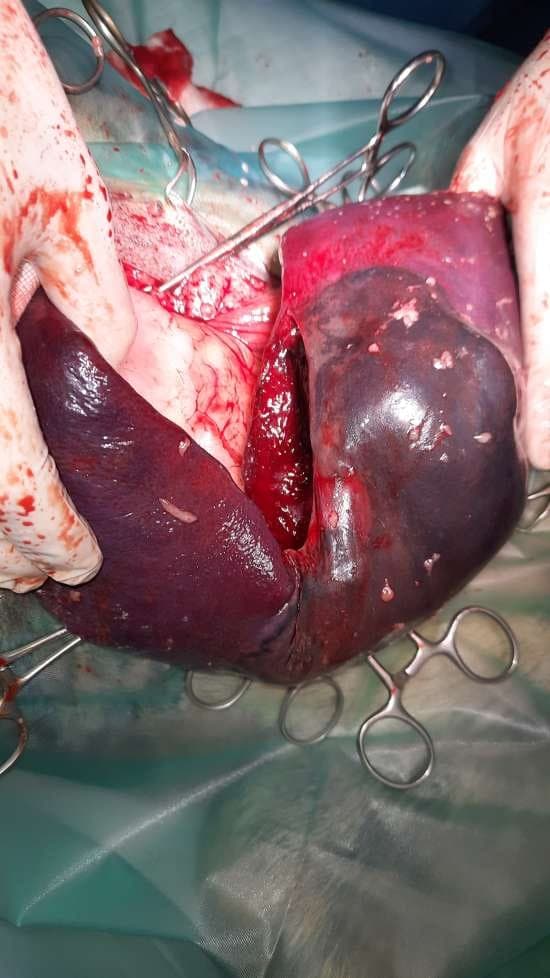
One of the most common procedures on the urogenital system in dogs and cats is castration or sterilisation. Castration is a surgical procedure that involves removing the testes in males or the ovaries and uterus in females. Sterilisation, on the other hand, involves removing the oviducts or the vas deferens, which makes reproduction impossible. These procedures are often performed both for health reasons and to control the animal population.
Another common procedure on the urogenital system in males is the correction of inguinal or abdominal hernias. In the case of an inguinal hernia, the surgeon opens the band of muscle in the groin in order to return the hernia to the abdominal cavity and closes the hernial opening. An abdominal hernia, in turn, requires opening the abdominal cavity in order to return the organs to their correct position.
In females, operations on the urogenital system include, among others, procedures to correct inguinal hernias and procedures to remove the uterus in the case of uterine diseases, such as inflammation of the uterus and tumours.
Other procedures on the urogenital system in animals are operations to remove urinary stones and urinary abscesses.
Operations on the urogenital system require thorough diagnostics before the procedure in order to determine the cause of the disease and assess whether an operation is necessary. After the procedure, the animal must undergo rehabilitation and be under veterinary care to ensure a quick return to health.
At our veterinary clinic, we offer advanced surgical technologies and experienced staff who are able to perform operations on the urogenital system in animals.
Our clinic uses the latest technologies and surgical methods to ensure the safety and effectiveness of every procedure. Our experienced staff consists of qualified veterinarians who provide high-quality services for your animal.
We also provide full care before and after the operation, including analgesia, monitoring of vital parameters, and regular follow-up visits. Our goal is to ensure the full health and good condition of your pet, which is why we also offer diagnostic services as well as prevention, in order to prevent disease.
We invite you to explore our animal surgery offering and to make use of our services.