
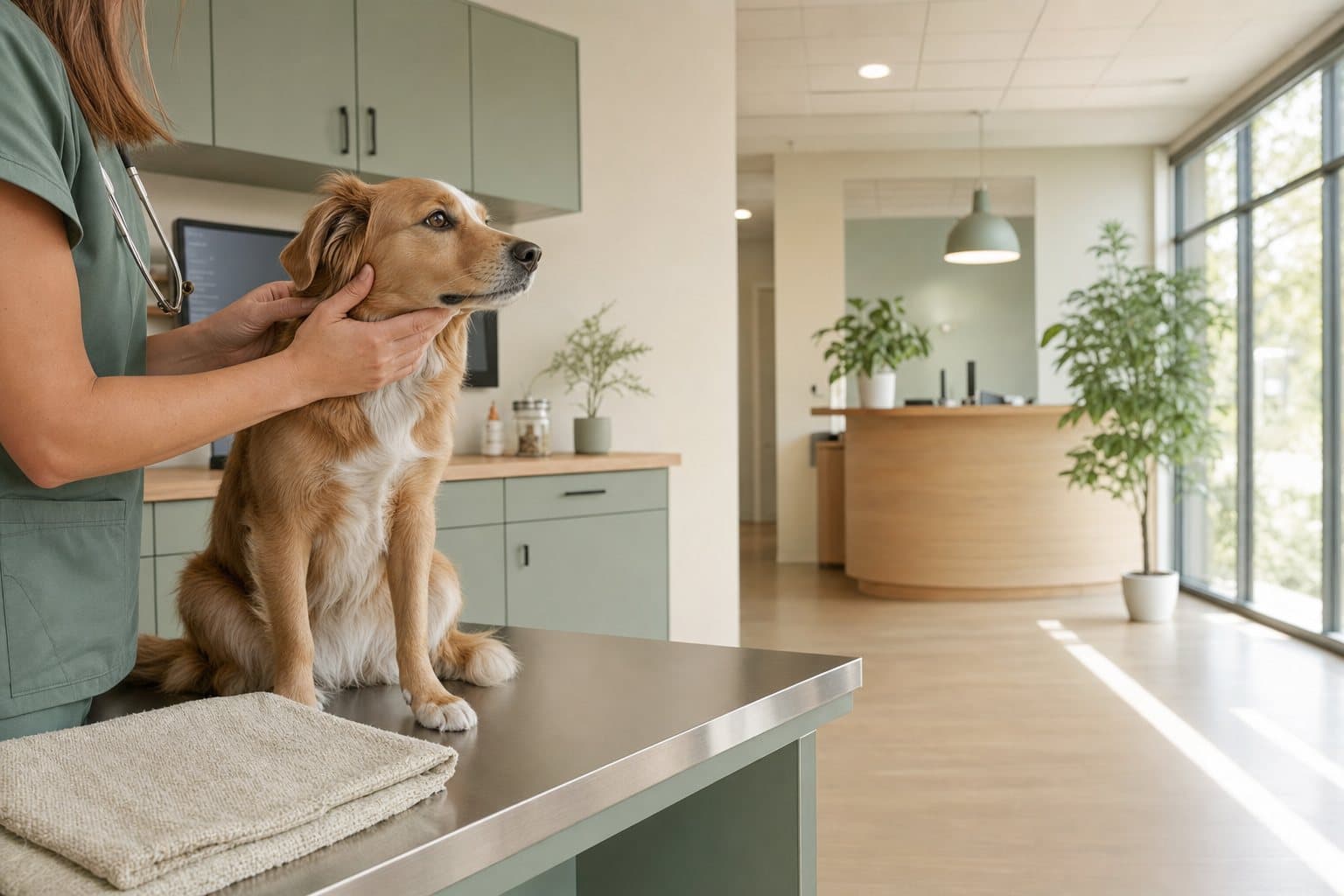
When your dog, cat, or any other member of the family feels unwell, one thing matters most: that someone takes care of them quickly, thoroughly, and with real compassion. At Hau-Miau — Private Veterinary Practice at ul. Siemieńskiego 23 in Warsaw's Ochota district — we have been building veterinary care exactly this way for over 30 years. For us, comprehensive care means that from the first phone call, through a thorough clinical examination, modern imaging and laboratory diagnostics, all the way to treatment, surgery, and ongoing nutritional support — your pet stays in the hands of the same, well-coordinated team. You don't need to drive across the city from one specialist to another, or explain your pet's medical history from scratch every time. Our practice was founded and is run by DVM Katarzyna Trojanowska, who has worked with small animals for more than 30 years — and that experience shows in every detail: in how she talks with owners, in her patience with a frightened patient, and in the precision behind every diagnostic and treatment decision. This guide walks you through what a visit looks like with us, how we approach safety and hygiene, and how to book a consultation.
Our approach — unhurried, stress-free visits
Animals cannot tell us what hurts or why they are afraid — which is exactly why we need to have time for them. At our clinic, every visit runs at the pace the patient needs, not the clock. Before the vet reaches for a stethoscope or thermometer, they observe how the dog or cat reacts to the new surroundings, let it settle in, and only then move on to the examination. Sometimes that means a few extra minutes of calm conversation with the owner; sometimes it means pausing part of the exam until the animal relaxes. We believe that this patience — not haste — is what allows us to notice more and arrive at a more accurate diagnosis.
Our motto — we have time for everyone who has time for their animals — is not just a line on a website. It shapes real organisational choices: longer appointment slots, flexible opening hours (on Tuesdays we're open continuously from 7:30 to 22:00, and on Mondays, Wednesdays and Thursdays we also see patients in the evening, until 22:00), and a genuine willingness to listen to every concern an owner brings, even ones that go beyond the "typical" questions. For many owners, simply being able to come in after work, without rushing and without feeling like they're taking up someone else's time, is already a relief.
The animal's own comfort matters just as much. Gentle handling, careful restraint, breaks during the examination, and — for more anxious patients — a conversation about how to make the next visit easier. Stress during a vet visit is natural, but it's our job to do everything we reasonably can to reduce it, for the animal's sake and for its owner's peace of mind.
We put just as much weight on talking things through with the owner. We try to explain every decision in plain language — what a given test is, why we're doing it, and what to expect from it — rather than relying only on technical terminology. That makes it easier to reach a shared, informed decision about what happens next, and it keeps the visit itself from becoming a source of uncertainty for the animal or its owner.
Tip: if your pet finds visits especially stressful, let us know when you call to book your appointment. We'll plan the visit to allow extra time and, where possible, shorten the wait once you arrive.
Modern diagnostics under one roof
One of the things our patients value most is that they don't have to search for specialists in other parts of the city. Ultrasound (USG), X-ray (RTG), laboratory tests, cardiology, ophthalmology, dentistry, and nutrition — all available in one place, delivered by a team that knows the animal's history and can consult each other's findings in real time. That saves time, but more importantly, it keeps care consistent: an ultrasound finding can point straight to a cardiology follow-up, and bloodwork results can reshape a nutrition plan.
- Ultrasound (USG). Ultrasound imaging assesses the structure of internal organs — the liver, kidneys, spleen, bladder, or reproductive system — without any surgery involved. It's painless and non-invasive, which makes it well suited both to routine preventive care in older animals and to investigating worrying symptoms such as loss of appetite, vomiting, or abdominal pain.
- X-ray (RTG). An X-ray is often the first step in diagnosing lameness, a suspected fracture, a persistent cough, or an injury after an accident. Because our equipment is digital, the image is available right after the scan, which helps us plan the next steps sooner.
- Laboratory tests. Blood and urine analysis gives us a picture of how internal organs are functioning, helps detect inflammation, hormonal or electrolyte imbalances, and underpins many treatment decisions — from choosing medication to clearing a patient for a procedure under anaesthesia. Regular lab work is also one of the pillars of preventive care, especially for older animals and ahead of a planned procedure.
- Cardiology. A cardiology consultation includes a detailed history, a clinical exam (listening to the heart, checking pulse and mucous membranes) and, when needed, further diagnostics such as an ECG or echocardiography. This matters especially for breeds prone to heart disease and for older animals.
- Ophthalmology. An eye examination assesses things like tear film quality, intraocular pressure, the clarity of the cornea and lens, and eyelid structure. It helps diagnose conditions such as conjunctivitis, corneal ulcers, cataracts, or eyelid defects, which can otherwise become a source of chronic discomfort.
- Dentistry. Periodontal disease is one of the more common, and easily overlooked, health issues in dogs and cats. Our dental care covers treatment of gum disease, periodontal procedures, and — when necessary — tooth extractions.
- Nutrition (dietetics). A nutrition consultation starts with a detailed dietary history and a body condition assessment, and ends with an individual feeding plan. Nutritional support helps manage chronic disease, supports recovery after procedures, and helps maintain a healthy body weight throughout an animal's life.
Diagnostics, though, is only the starting point. If the results point to the need for a procedure — a planned one, such as removing a skin growth, or an urgent one, such as treating the aftermath of an accident — we carry out surgery in the same clinic, following the same safety standards and individualised approach described later in this guide.
How a visit works, step by step
We know that not knowing what to expect can be just as stressful for owners as the reason for the visit itself. Here's what a typical appointment with our team looks like.
- Book by phone. Call +48 22 823 35 63, briefly describe the reason for the visit, and we'll agree on a convenient time together. If you already know a specific test will be needed (an ultrasound or a cardiology consultation, for example), it helps to mention it — it lets us plan the appointment better.
- Prepare at home. Cats and smaller pets travel best in a secure carrier; dogs should come on a leash, ideally with a harness. If your pet has been treated before, bring their health record, any test results, and a list of current medications.
- Check-in and a short interview. On arrival, we confirm the patient's details and ask about the reason for the visit and any observations that might help the vet — when symptoms started, and whether diet, appetite, or activity levels have changed.
- Clinical examination. The vet carries out a thorough physical exam, listens carefully to what the owner reports, and decides on that basis whether further diagnostics are needed.
- On-site diagnostics, if needed. Because ultrasound, X-ray, and laboratory testing are all done in the same clinic, we can often discuss the results during that same visit.
- Discussing results and next steps. The vet explains what the results mean, proposes next steps, and answers your questions. When useful, you'll receive written recommendations — for treatment, diet, or medication dosing, for example.
- Follow-up visits. In many cases — especially with chronic conditions, after procedures, or during nutritional treatment — we schedule a follow-up to check progress and adjust the plan if needed.
Tip: if you can, bring your pet's existing medical records — their health booklet, previous test results, and a list of medications and supplements. It helps the vet get up to speed faster, and it can save your pet from repeating tests unnecessarily.
Safety & hygiene
We treat patient safety — both in terms of hygiene and anaesthesia — as a foundation of veterinary care, not an add-on.
For everyday disinfection of exam rooms, procedure tables, and shared surfaces, we use a nano-silver-based system instead of harsh chemical disinfectants. That choice matters most for animals with allergies or sensitive skin, and for our youngest and oldest patients, for whom exposure to strong chemicals could be an added burden. Eco-friendly disinfection also means a less sharp, less irritating smell in the waiting room and exam rooms — which in practice makes for a calmer environment for noses far more sensitive than ours. We apply this consistently throughout the clinic, not only in procedure rooms but also in the waiting room and other areas every patient passes through.
The second pillar of safety is our approach to anaesthesia. Every procedure requiring general anaesthesia is preceded by a health assessment tailored to the animal's age, weight, breed, and any existing conditions. The anaesthetic protocol is chosen individually, and throughout the procedure we monitor the patient's vital signs, alongside appropriate pain management (analgesia) before, during, and after the procedure. After waking up, the animal stays under observation until it is safe for them to go home.
Please note: if your pet is on long-term medication, has a diagnosed chronic condition, or has reacted badly to anaesthesia in the past, please tell our team when you book your appointment — it lets us plan a safe procedure well in advance.
Frequently asked questions
How do I book a visit at Hau-Miau?
Just call +48 22 823 35 63. We see patients on Mondays from 7:30 to 13:00 and 16:00 to 22:00, on Tuesdays continuously from 7:30 to 22:00, and on Wednesdays and Thursdays from 7:30 to 13:00 and 16:30 to 22:00. On Fridays and at weekends the rota varies, so please call ahead. When you call, briefly tell us the reason for the visit — it helps us find the right time slot and, if needed, prepare for a specific test in advance.
What should I do in an emergency?
If it happens during our opening hours, call us before you set off — that way our team can prepare to see your pet urgently. Outside our opening hours, in a life-threatening emergency, please contact the nearest 24-hour emergency veterinary clinic as soon as possible.
What happens at a first visit for a new patient?
If you're switching clinics, it helps to bring your pet's existing health booklet, test results, and vaccination records — this lets us get up to speed on your animal's medical history quickly. A first visit usually involves a more detailed interview than a routine check-up, since we're setting up a complete patient file, so it's worth allowing a little more time than for a routine visit.
How much does a visit cost?
The cost of a visit depends on its nature — a routine check-up is priced differently from a specialist consultation combined with imaging or laboratory diagnostics. The most reliable way to get a quote is to call and describe the reason for your visit, or to ask during the appointment itself, before we go ahead with any additional tests or procedures — so that every next step is something you've agreed to and understand.
What should I bring to a visit?
For a cat or other small pet, bring a secure carrier; for a dog, a leash and ideally a harness. Bring any existing medical records, your pet's health booklet, and a list of current medications and supplements. If the vet has already asked for a stool or urine sample, bring it in a clean, tightly sealed container. If your pet has a favourite blanket or treats that help them settle, feel free to bring those along too — a familiar scent can genuinely take the edge off the stress of a visit.
How long does a visit take?
That depends on the reason for it. A routine check-up or vaccination is usually quicker, while a first visit, a specialist consultation (nutrition or cardiology, for example), or a visit involving imaging takes more time — so the vet can take a full history, carry out the examination, and talk you through the results without rushing. We can give you an estimate of how long to expect when you book.
Your pet's health deserves care that doesn't stop at a single test — calm diagnostics, thoughtful treatment, and a team that genuinely has time for them. Don't wait for worrying symptoms to get worse, or for a small issue to grow into a serious one. Book a visit — call +48 22 823 35 63. We're happy to answer your questions and find a convenient time at our clinic at ul. Siemieńskiego 23 in Warsaw's Ochota district.