
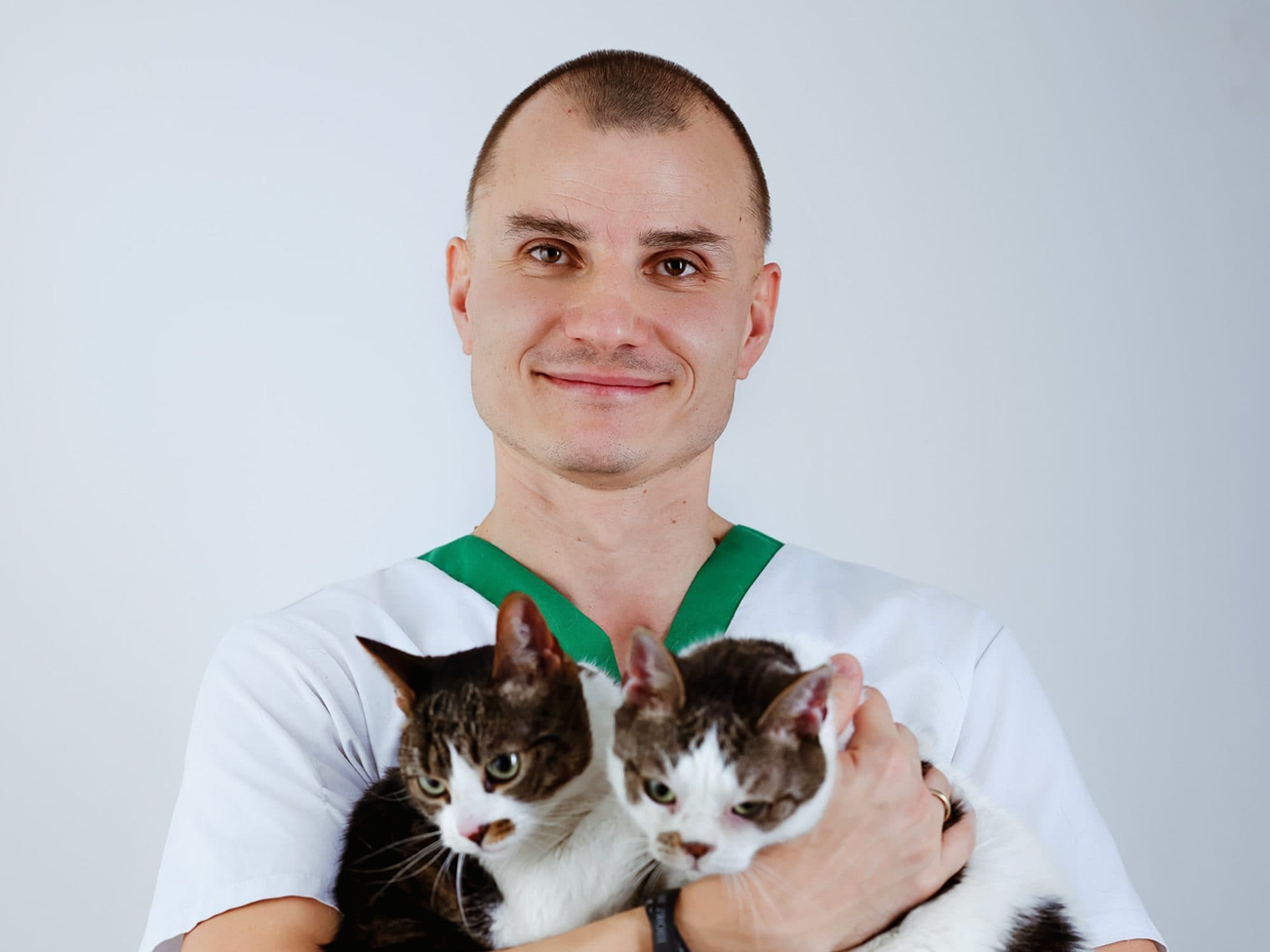
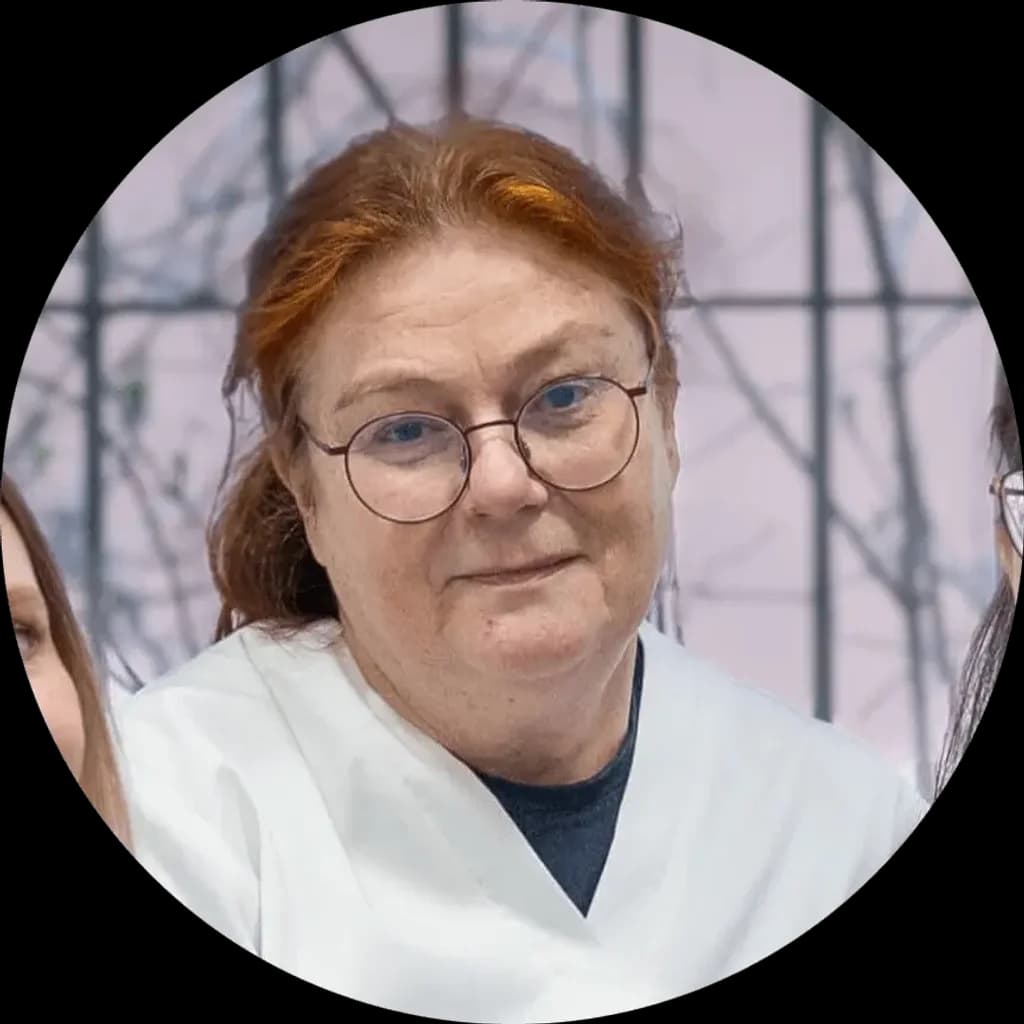
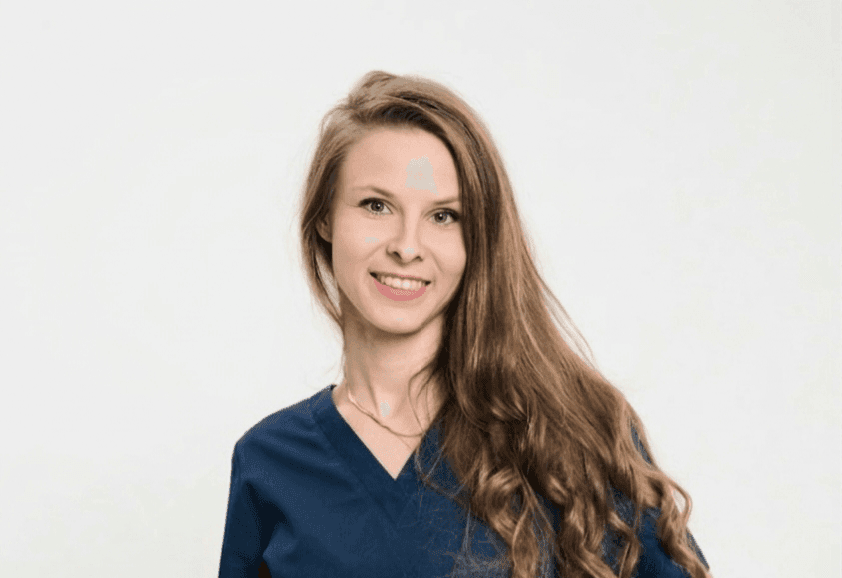
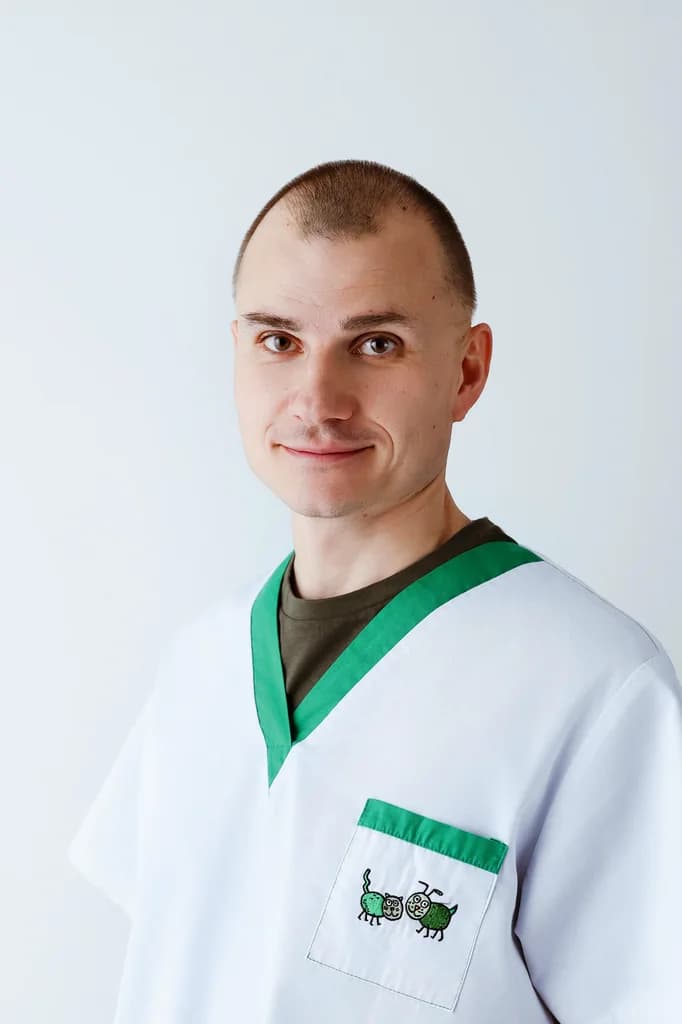

Behind every visit to Hau-Miau stands an actual person — not a reception desk, not a procedure, but a vet who remembers that your cat won't tolerate being listened to on the left side, or that the dog in the next room is more frightened of the smell of disinfectant than of the injection itself.
Our clinic at ul. Siemieńskiego 23 in Warsaw's Ochota district is now home to eight veterinarians. Each has grown in a different direction — internal medicine, cardiology, ophthalmology, ultrasound diagnostics, dentistry, nutrition — so that as a team we can look after an animal more broadly than any single general practice could. The clinic is run by DVM Katarzyna Trojanowska, who has worked with small animals for over 30 years — she received her veterinary diploma in 1984 and has been building a place where both animals and their owners can feel safe ever since. Some have worked at the clinic for many years, others joined more recently — but all of them share the same approach to the patient and the owner.
This page isn't a glossy brochure. It's closer to an answer to the questions owners genuinely ask themselves before they call us for the first time: who will look after my animal, will I see the same person each time, and will there actually be time for an unhurried conversation before anyone lays a hand on my dog or cat.
What follows is what our team's work actually looks like day to day — not a list of selling points, but concrete principles and situations we deal with. If you still have questions after reading it, the simplest thing is just to call us.
Our philosophy of care
An animal that ends up in a consulting room usually has no idea what's happening — it only senses an unfamiliar smell, different sounds, and tension in its owner's voice. That's why the first thing we look after isn't the diagnosis, but calm. We would rather give an animal a moment to settle into the room than reach straight for a stethoscope — and give the owner time to explain why they've actually come in before we start asking questions.
In practice, that means a few principles we try to hold to regardless of which vet is running the appointment:
- We talk to the owner before we touch the animal — asking about history, concerns, and what has and hasn't helped so far.
- We don't rush an examination just because another patient is waiting in reception.
- We explain what we're doing and why, in plain language, without assuming the owner has any medical background.
- If an animal is frightened, we look for a gentler way to examine it, even if that takes longer.
- We treat an owner's questions — even the third time they're asked — as part of the job, not an interruption to it.
The same goes for animals that are difficult in the consulting room — cats that scratch out of fear, dogs that growl because of a bad experience in the past. In these situations we don't force things through. Sometimes a shorter, repeated visit is a better solution than a single examination pushed through at any cost, however stressful that would be for everyone involved.
Not every examination can be entirely stress-free, and some situations call for speed and decisiveness. But how calm a visit feels depends, to a very large extent, on the vet's approach — and that's something the whole team deliberately builds towards, not just the founder's own consulting room.
"We have time for everyone who has time for their animals" is a line that has long accompanied our clinic, and it isn't a website slogan. It's how we plan the appointment schedule, so that no vet ever has to apologise to a patient for being rushed.
Specialisations working together
Eight vets in one team is no accident — it's a deliberate choice, so that an animal doesn't have to travel between unconnected practices once something goes beyond a routine check-up. Our clinic brings together expertise across several fields:
- Internal medicine — everyday diagnosis and treatment of internal conditions; the starting point for most visits, and the place a patient is referred onward from if more specialised knowledge is needed.
- Cardiology — assessing heart function in older animals, breeds predisposed to heart defects, and patients with a cough, breathlessness, or reduced exercise tolerance.
- Ophthalmology — diagnosing and treating eye conditions, from conjunctivitis to cataracts and eyelid defects.
- Ultrasound diagnostics — imaging of the abdomen and internal organs, revealing more than a clinical examination alone ever could.
- Dentistry — oral hygiene and treatment, important not just for an animal's comfort but for its overall health.
- Nutrition — individual feeding plans for healthy animals, those with chronic conditions, and those recovering after a procedure.
The real value of this arrangement is that our vets can consult one another instead of working in isolation. If the internist notices something concerning about heart function during a routine visit, they can refer the patient straight to a colleague who focuses on cardiology — without you having to find an outside practice and explain the whole case history again. The records stay in one place, and the vet in charge can see what has happened at every earlier stage. The same applies in reverse — if a cardiologist or ophthalmologist notices something outside their own field, they hand the patient back to the internist or to a colleague in another specialisation, rather than leaving the owner to work out what happens next on their own.
Continuity of care means something simple to us: you shouldn't have to tell your animal's story from scratch every single time. Your vet — or the colleague with the specialisation you happen to need — already knows it.
That doesn't mean every case ends up with a specialist. The great majority of visits are resolved with the internist alone, and a referral to someone with a specific specialisation only happens when it's genuinely needed. That way we avoid an animal going through tests it doesn't need just because the practice happens to have the equipment for them — we're guided by what the patient actually requires, not by how fully we can make use of what's available.
House calls and accessibility
Not every animal can be transported to the clinic safely or without stress. That's why some of our vets also offer house calls — for situations where it genuinely matters for the animal or its owner. It's a complement to a clinic visit, not a substitute for one — meant for specific, recurring situations rather than as a general alternative to coming in.
A house call tends to make sense when:
- the animal is elderly, struggles to move, or has a chronic condition, and transport itself would be a serious burden,
- a cat reacts to travel with such stress that it would skew the examination,
- the owner has limited mobility and getting to the clinic is itself a problem,
- there are several animals at home who need something routine, such as a vaccination or check-up,
- what's needed is a calm conversation and examination as part of senior or palliative care.
The scope of a house call differs from what can be done in a room equipped with an ultrasound or X-ray machine — the vet arrives with a diagnostic bag, not an entire practice. So before we book one, we work out together whether an at-home examination genuinely covers the situation, or whether you'd be better served by a visit to the clinic, where we have the full diagnostic set-up on hand.
Availability of house calls depends on that day's schedule and which part of Warsaw you're in — the simplest way to find out is to ask by phone when you book. If you're not sure whether your situation qualifies, just describe it on the phone — we'll work out together what makes more sense.
Ongoing education and standards of care
Veterinary medicine changes from one year to the next — new diagnostic methods appear, treatment protocols get updated, and recommendations on nutrition or anaesthesia shift. A team that stops learning will, sooner or later, end up treating animals the way it was done a decade earlier.
Our vets regularly attend industry training and conferences, keep up with current veterinary literature, and consult one another on more difficult cases — even when a patient doesn't formally need referring to someone else on the team. We also invest in diagnostic equipment, because even the best knowledge counts for little without the tools to apply it — which is why the clinic has its own ultrasound, X-ray, and laboratory facilities.
This matters especially in areas where older knowledge can go out of date quickly — approaches to anaesthesia in older animals, chronic pain management, or standards of senior care. Rather than sticking with habit, we try to check what current sources say on a given subject and change our approach where needed.
What ties the whole team together is an approach shaped by the clinic's founder from the start: rigorous diagnostics, caution in reaching conclusions, and an honest conversation with the owner about what to expect — including situations where the honest answer is "let's keep watching" rather than immediate treatment.
Frequently asked questions
How do I choose the right vet for my pet?
You don't need to settle on a specific vet before your first visit. In most cases, it's best to start with an internist, who will assess your animal's general health and, if needed, refer you on to a colleague who focuses on cardiology or ophthalmology, for example. If you already know the issue falls within a specific area — say, your dog has a long-standing heart condition — mention it when you book, and we'll try to match you with a vet who has relevant experience in that area.
Can I always see the same vet?
Yes, and we'd genuinely encourage it. Ongoing contact with one vet means you don't have to retell your animal's medical history from scratch every time, and it's easier for that vet to notice changes in your animal's health over time. When booking, simply ask for a specific person — if they're not available that day, we'll offer the next available slot or, for more urgent matters, another vet from the team who can review the existing records.
How do I book an appointment with a specialist, such as a cardiologist or ophthalmologist?
Just call and tell us what's going on — as a rule, we'll suggest who on the team is worth seeing, based on the symptoms and your animal's history. For specialist visits (cardiology, ophthalmology, ultrasound, dentistry), you may sometimes wait a little longer than for a general appointment, so for anything that isn't urgent, it's worth calling well ahead. This is especially true for planned check-ups, such as a routine heart check for an older dog — it's better to book that in advance than to leave it until the last moment.
Is a house call always possible?
Not in every case — house calls are only offered by some of the team, and availability depends on the schedule and which part of the city you're in. Not every examination can be done outside the clinic either, since some diagnostic equipment, such as ultrasound or X-ray, stays on site. During the phone call, we'll work out together whether a house call makes sense for your situation or whether it's better to come in. If none of the vets who do house calls has a free slot that day, we'll offer the next available one or a visit at the clinic instead.
How should I prepare for a first visit?
It helps to bring any existing medical records for your animal — a vaccination booklet, results of earlier tests, details of any medication. It's also useful to jot down your own observations: how long a symptom has been present, what makes it better or worse, and whether your animal's behaviour, appetite, or activity level has changed. Dogs are best brought on a lead, while cats and smaller animals should travel in a secure carrier — it reduces the stress of the journey to the clinic itself. If we expect a blood test on an empty stomach might be needed, we'll let you know in advance, when you book.
What should I do in an emergency?
During the clinic's opening hours, always call us first, before you set off — we'll tell you whether we can see your animal out of turn and how best to prepare for the journey. Situations that call for immediate contact include breathing difficulties, loss of consciousness, seizures, heavy bleeding, suspected poisoning, or a road traffic injury. If it happens outside opening hours, contact your nearest 24-hour veterinary emergency clinic. If possible, ask someone to help with the journey — one person can drive while the other keeps the animal calm.
In an emergency, time matters — call +48 22 823 35 63 and let us know by phone that it's urgent.
The team we've built isn't a random collection of consulting rooms sharing an address — it's people who have worked together for years, who consult one another, and who treat your animal as a patient for the long term, not just for one visit. If you're looking for a clinic where someone will genuinely remember your dog or cat at the next visit, we'd love to hear from you. Whether this is your first visit or you've been coming to us for years, we look forward to meeting you and your pet.
Book a visit — call +48 22 823 35 63.