We offer blood and urine tests, as well as all other additional tests available from the laboratories we work with:
- VETLAB
- LABVET
- LABOKLIN
- IDEXX
We always try to tailor the scope of testing to your needs and circumstances – both medical and financial. A panel can be narrow, limited to a handful of the most important parameters, or broad, covering many different measurements at once. There is no single, universal set of tests that suits every patient, which is why we always try to advise you on which tests would be most valuable in your particular situation, and to explain what you can expect from them. It's also worth remembering something that's easy to forget: you are the ones paying for the tests, so they are your property. It's always worth collecting the printed or electronic copy of the result, even if the vet interprets it for you on the spot that same day – the result may still come in useful later, for example at a future visit, for a consultation with another specialist, or simply as a point of reference going forward. Blood and urine tests serve us, as vets, in reaching an accurate diagnosis, but they belong to you and to your pet.
In this article, we want to go a little deeper than usual and explain what exactly lies behind the individual parameters of a blood and urine test, what preparing an animal for testing before a procedure under anaesthesia involves, and why regular, preventive screening matters so much for senior pets. Let us say upfront: you won't find specific numerical values or reference ranges here – those always depend on the laboratory, the testing method, and the individual patient's situation, and their interpretation always belongs to the treating vet. Our aim here is rather to explain what each test actually checks, and why it's worth having them done regularly.
How to Prepare Your Pet for a Blood Test
Except in exceptional situations where an immediate blood analysis is necessary – for example, in an emergency where there's no time to lose – it's best to bring your pet in the same way we ourselves are usually asked to prepare for our own blood tests: in the morning, on an empty stomach. In practice, this comes down to a few simple rules:
- Blood is drawn while fasting, that is, after a 12-hour fast.
- During the fasting period, the animal must have constant access to drinking water – dehydration skews the results and makes the blood draw itself more difficult.
- IF AT ALL POSSIBLE, PLEASE GIVE YOUR PET A FEW SPOONFULS OF WATER BEFORE LEAVING HOME – this will make it easier for us to draw blood and will be less stressful for the animal.
In short: stress thickens the blood, which makes both the vein puncture itself and the laboratory's later work on the sample more difficult. A calm, well-hydrated animal is one from whom we can draw a sample more easily and quickly – which benefits the pet, us, and the quality of the result.
It's also worth knowing why fasting matters so much. After a meal, dietary fat enters the bloodstream, which can make the plasma cloudy, slightly milky – a phenomenon known as lipaemia. Cloudy, fatty plasma makes the laboratory analysers' work more difficult and can distort the results of many biochemical parameters, not only those directly related to fat metabolism. That's why we ask you to bring your pet in the morning, on an empty stomach – this way the result is likely to be as reliable as possible the first time, without needing to repeat the test.
If your pet is on long-term medication, has diabetes, or has another condition requiring regular administration of medication, please always ask us in advance whether the medication should be given on the day of testing or withheld until after the blood draw. This is one of those small details that's easy to overlook, but which can have a real effect on how the result is interpreted.
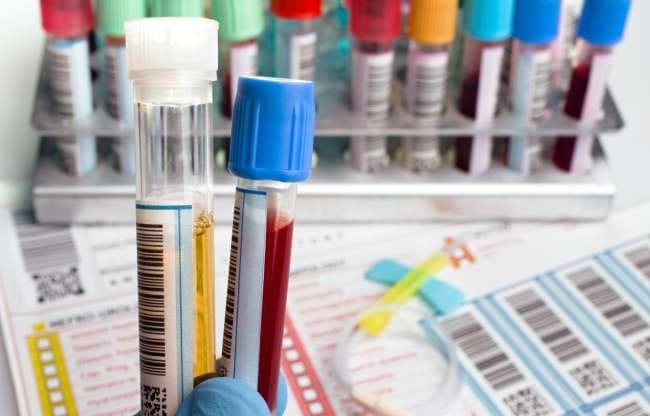
What a Complete Blood Count Can Tell Us
Blood tests can be divided into two large subgroups: the complete blood count, which gives us information about blood cells, and the biochemistry panel, which checks the composition of the plasma. Both parts are equally important, and only together do they give a broad picture of the patient's state of health. Let's start with the complete blood count – what the blood cells themselves tell us.
Red Blood Cells and Anaemia
Red blood cells (erythrocytes) carry oxygen from the lungs to every tissue in the body. When there are too few of them, or when they contain too little haemoglobin – the pigment that binds oxygen – we call this anaemia. Anaemia isn't a disease in itself but a symptom – it can result from blood loss, from insufficient production of new red blood cells by the bone marrow (for example in the course of chronic kidney disease or other systemic conditions), or from accelerated destruction of red blood cells already in circulation, known as haemolysis. Haemolysis can have a parasitic, immune-mediated, or toxic cause. In an animal with anaemia, a vet will often notice pale mucous membranes, weakness, and quicker tiring during exercise.
In standard blood counts, red blood cells are usually described using several related parameters measured together: the red blood cell count itself, the haemoglobin level, and the haematocrit, which is the percentage of blood volume made up of red blood cells. All three values usually move together, in the same direction, which is why a vet assesses them jointly rather than in isolation – a consistent picture across all three parameters is more reliable than any single number on its own.
The rarer, opposite situation is an elevated red blood cell count, known as polycythaemia. It can be relative – when the body is dehydrated and the blood becomes more concentrated – or, far less often, absolute, associated with chronic tissue oxygen deprivation or with disorders of the bone marrow itself. In every case, a deviation in red blood cell count from the range typical for a given patient is a signal for further investigation, not a diagnosis in itself.
White Blood Cells and the Differential Count
White blood cells (leukocytes) are the cells of the immune system, and both their total number and the relative proportions of the different types – the so-called differential count – say a great deal about what's happening in the animal's body:
- Neutrophils – the most numerous group of white blood cells in dogs and cats, the first line of defence in acute bacterial infections and in any other inflammatory process; an elevated count usually accompanies active inflammation or infection.
- Lymphocytes – cells responsible for specific immunity, including antibody production; their numbers change in the course of viral infections and chronic inflammatory conditions, among other things, as well as under the influence of the stress of a vet visit itself – severe stress can temporarily shift the proportions of the different white blood cell types, producing what's known as a "stress leukogram", which a vet can distinguish from a pattern typical of disease.
- Monocytes – cells associated with chronic inflammation, tissue healing, and the clearing of damaged cells and inflammatory debris from the body.
- Eosinophils – their numbers classically rise in allergic reactions and in the presence of certain parasites, including gastrointestinal parasites.
- Basophils – the rarest type of white blood cell, also associated with allergic and parasitic processes.
An increase or decrease in white blood cell count never tells us outright what exactly is wrong with an animal – it's more a clue as to the nature of the process at work (inflammation, infection, allergy, stress, suspected parasites), which a vet always weighs together with the patient's history and clinical examination. The direction and pace of change can matter just as much as the absolute numbers – comparing a fresh result with a patient's previous test results often says more than a single reading considered in isolation from the disease history.
Platelets
Platelets (thrombocytes) are responsible for the first stage of clotting – they're the first to "plug" a damaged spot in a blood vessel, before the full clotting cascade kicks in. Too low a platelet count, known as thrombocytopenia, can show up as a tendency to bruise, small pinpoint haemorrhages on the mucous membranes, or prolonged bleeding even after a minor cut. The causes of thrombocytopenia vary widely – from immune-mediated disorders, through certain tick-borne infections, to reduced platelet production in the bone marrow – which is why a low result always calls for further investigation rather than simply being noted. In clinical practice, platelet count is also one of the parameters a vet checks especially carefully before any surgical procedure, when normal clotting has a direct bearing on patient safety.
Reticulocytes – Is the Bone Marrow Responding to Anaemia?
Reticulocytes are young, not yet fully mature red blood cells, freshly released from the bone marrow into the circulating blood. Their count is extremely useful in assessing anaemia, because it tells us whether the bone marrow is responding to the shortage of red blood cells with increased production at all. An elevated reticulocyte count indicates regenerative anaemia – the body has recognised the problem and is actively trying to correct it, which is typical, for example, of blood loss or haemolysis. If the reticulocyte count remains low despite the presence of anaemia, we call this non-regenerative anaemia – a sign that the bone marrow itself, or factors affecting it (such as chronic kidney disease or nutritional deficiencies), aren't allowing for an adequate response, which usually calls for broader investigation.
Blood Smears and Screening for Parasites
Extending a standard blood count with a blood smear lets a vet examine the cells directly under a microscope, assess their structure and shape, and look for abnormalities not visible in the automated numerical result. A smear also lets us confirm or rule out the presence of blood parasites, such as Babesia spp. – a protozoan spread by ticks that causes babesiosis, a disease that in dogs can lead to rapidly progressing haemolytic anaemia and requires urgent treatment. A smear can also be helpful when other blood parasites are suspected, and in cases where the automated cell count gives unclear or borderline results.
A blood test result never replaces a clinical examination of the animal. It is a valuable complement to one, but is always interpreted in the context of the patient's history and what the vet finds during the examination itself.
What a Blood Biochemistry Panel Can Tell Us
When testing blood biochemistry, we can choose a narrow or a broad panel of tests – the more parameters we check, the more information we gain about our dog's or cat's health. Below, we describe the most commonly tested parameters and what they generally tell a vet. Always in relation to the specific laboratory's reference range and the patient's full clinical picture – never in isolation from it.
The Liver: Enzymes and Bilirubin
The liver acts as the body's own chemical laboratory – it takes part in fat, protein, and carbohydrate metabolism, produces the bile needed to digest fats, and neutralises many toxic substances. The liver enzymes measured in a biochemistry panel are released into the blood when liver cells are damaged – so elevated activity can point to an ongoing disease process within the organ, though on its own it doesn't yet say what's causing it. A separate group of parameters relates more to bile outflow than to direct cell damage – their rise, often together with elevated bilirubin, can suggest impaired bile flow, known as a cholestatic pattern, and can be visible clinically as jaundice, meaning a yellowish discolouration of the mucous membranes, the whites of the eyes, or the skin. Distinguishing whether a problem mainly involves the liver cells themselves or rather bile outflow is one of the first things a vet works out when planning further investigation.
The Kidneys: Urea, Creatinine, and SDMA
The kidneys are responsible for removing metabolic waste products from the body, regulating fluid and electrolyte balance, and, indirectly, for many other processes throughout the body. Two classic parameters used to assess how well they're working are urea (BUN) and creatinine – substances that, under normal conditions, are efficiently cleared by the kidneys, and whose elevated blood levels can indicate that the kidneys are no longer managing this task as well as before. The trouble is that the kidneys have a very large functional reserve – they can compensate for partial damage for a long time before blood creatinine even begins to drift away from the level typical for a given patient. In other words, classic kidney parameters can look reassuring for a long time, even while something concerning is already happening in the kidneys.
For this reason, a relatively new parameter has been introduced into routine veterinary diagnostics – SDMA, or symmetric dimethylarginine. Its advantage is that it usually starts to drift away from a patient's typical level earlier than creatinine does, before a larger share of kidney function has been lost. This makes SDMA helpful in detecting chronic kidney disease at an earlier stage, particularly in older animals, where screening tests are carried out regularly precisely in order to catch that moment as early as possible. It's worth stressing: SDMA doesn't replace creatinine or the full clinical picture, but complements it – decisions about further management are always made by the vet based on the full set of results, the clinical examination, and often urinalysis and imaging as well.
Electrolytes
Sodium, potassium, and chloride are the basic electrolytes measured as part of a biochemistry panel. Among other things, they're responsible for normal muscle tone, including the heart muscle, for nerve conduction, and for the body's water balance. Electrolyte disturbances can accompany many conditions – from kidney problems, through gastrointestinal illness involving vomiting or diarrhoea, to hormonal disorders – and are often one of the first signs that something is happening in the body that requires urgent attention. In patients with vomiting, diarrhoea, or loss of appetite, assessing electrolytes can be just as important as assessing the organs themselves.
Glucose
Blood glucose is one of the fundamental metabolic parameters. An elevated level, or hyperglycaemia, is most often associated with diabetes, although in cats it can also rise temporarily simply in response to the stress of the visit or of the blood draw itself – which is why a vet always interprets a single elevated glucose reading in a cat cautiously, ideally alongside other parameters. A low glucose level, or hypoglycaemia, is less common but can be an urgent condition requiring prompt intervention.
Cholesterol and Triglycerides
Cholesterol and triglycerides reflect the body's fat metabolism. Their levels can change in the course of many conditions, including thyroid disorders, diabetes, or pancreatitis, but they can also simply be elevated after a recent meal – which is yet another reason we care so much about blood being drawn on an empty stomach. A sample taken shortly after eating is often visibly cloudy due to the presence of fat, that is, lipaemic, which makes the laboratory's work more difficult and can distort the readings of other parameters unrelated to fat as well.
Total Protein, Albumin, and Globulins
Total protein in the plasma is divided mainly into albumin and globulins. Albumin is produced by the liver and is responsible, among other things, for maintaining the blood's oncotic pressure – in simple terms, for keeping fluid inside the blood vessels rather than letting it leak excessively into the tissues. A low albumin level can result from liver failure, excessive protein loss through the kidneys or gastrointestinal tract, or malnutrition. Globulins, in turn, are a varied group of proteins, including antibodies – their elevated level often accompanies chronic activation of the immune system, for example in the course of chronic infections or inflammatory diseases.
The Pancreas
Assessing the pancreas can involve measuring the activity of digestive enzymes such as lipase and amylase, and, for more detailed diagnostics, tests that are more specific to the pancreas itself, available among other places from the laboratories we work with. Elevated activity of these parameters, especially combined with relevant clinical signs such as abdominal pain, vomiting, or loss of appetite, can raise suspicion of pancreatitis – a condition that, in dogs and cats, can be either acute or chronic, and always requires assessment by the treating vet.
Muscle Enzymes
A biochemistry panel is sometimes extended to include enzymes associated with muscle tissue. Their activity can rise after an injury, after prolonged immobility, after intense physical exertion, and sometimes accompanies conditions of the muscles themselves. In patients who come to us after a road accident, a fall from height, or a period of prolonged lying down due to another illness, assessing these parameters can help build a fuller picture of the clinical situation.
The Thyroid
Thyroid hormones regulate the rate of metabolism in almost every tissue in the body, which is why disorders of the thyroid produce a very varied clinical picture. In dogs, hypothyroidism – an underactive thyroid gland – is by far the more commonly seen condition; it can show up as weight gain despite an unchanged diet, sluggishness, a decline in coat quality, or greater sensitivity to cold. In cats, especially older ones, the opposite situation is far more often diagnosed – hyperthyroidism, usually associated with excessive secretion of thyroid hormones, which can present as weight loss despite a good or even increased appetite, hyperactivity, and a rapid heart rate. In both cases, the basic screening test is measuring the level of the thyroid hormone T4, and in more complex cases a vet may recommend extending the work-up with additional parameters, including TSH.
What a Urinalysis Can Tell Us
A urinalysis rounds out the picture from bloodwork with information that blood tests alone cannot provide – particularly when it comes to assessing the kidneys' concentrating ability and the state of the urinary tract itself. It's best to deliver the sample as fresh as possible, and the vet will choose the collection method – free catch, collection by the owner into a clean container, or direct collection by the vet – to suit exactly what we want to check, since some parameters are more reliable with one collection method and others with a different one.
Specific Gravity
Urine specific gravity tells us how well the kidneys are able to concentrate urine relative to blood plasma. It's one of the most important parameters for assessing kidney function – the ability to concentrate urine properly is one of the first functions to falter as chronic kidney disease develops, often before other parameters, such as creatinine, begin to drift from the level typical for a given patient.
pH
Urine pH depends, among other things, on diet, the animal's general condition, and the presence of any urinary tract infection. It also matters for the risk of certain minerals in the urine crystallising – a urine pH that's too alkaline or too acidic can favour the formation of different types of crystals, a subject we cover in more depth in a separate article on bladder stones in cats.
Protein
The presence of protein in urine, or proteinuria, can result from problems at the level of the kidneys themselves – damage to the glomerular filter – or from processes occurring further down, in the urinary tract, such as bladder inflammation. Persistent proteinuria, especially when confirmed across several consecutive samples, is always a signal for further investigation.
Glucose and Ketones
The presence of glucose in urine is most often linked to diabetes – healthy kidneys retain glucose in the body, and its appearance in the urine usually means blood glucose has exceeded the threshold beyond which the kidneys can no longer keep up. Ketones in the urine can appear in the course of uncontrolled diabetes, but also with prolonged loss of appetite or fasting – the body then starts obtaining energy in a different way, which can be detected in the urine.
Urine Sediment
Examining urine sediment under a microscope reveals what a simple test strip cannot: the presence of red and white blood cells, bacteria, various types of crystals, and sometimes casts – structures that form in the kidney tubules, whose presence can signal a process happening directly in the kidneys rather than only in the lower urinary tract. As with the other elements of a urinalysis, assessing the sediment always requires weighing it against the patient's clinical picture.
Blood Tests Before Anaesthesia
Any procedure carried out under sedation or general anaesthesia – whether it's a dental procedure, a neuter, a spay, or a more serious operation – places a temporary burden on the animal's body. The drugs used for anaesthesia are metabolised and cleared from the body mainly by the liver and kidneys, which is why it's worth knowing how these organs are functioning before any such procedure.
A standard pre-anaesthetic panel usually includes a complete blood count and basic biochemistry, and in some situations a vet may additionally recommend checking clotting times – particularly if the planned procedure carries a higher risk of bleeding, or if the patient's history raises any doubts about normal blood clotting. The goal of this testing is to catch any abnormalities, sometimes entirely without symptoms – mild anaemia, a reduced platelet count, or impaired kidney or liver function – before we administer any anaesthetic drug at all.
The scope of recommended pre-operative testing is always scaled to the patient's age and health status. In a young, healthy animal with no significant history, the basic panel tends to be narrower, whereas in an older or chronically ill patient, or one whose previous tests showed any abnormalities, a vet will usually recommend a broader panel. The decision on exactly what such a panel should look like in a given case always belongs to the vet performing the procedure – they're responsible for the patient's safety in the treatment room and need to be confident they have enough information about the organs that matter most for a safe anaesthetic.
The result of pre-operative testing also has direct practical significance: based on it, the vet chooses the approach best suited to that particular patient, decides whether the procedure can go ahead as originally planned or needs additional preparation, and sometimes postpones it until an identified abnormality has been stabilised. It also happens that pre-operative testing is the first thing to reveal a health problem the owners weren't previously aware of, even though the animal seemed perfectly healthy day to day.
Preventive Screening for Senior Pets
Animals age faster than people, and large dog breeds age faster than small ones – which is why the age at which we start calling a dog or cat a "senior" depends on the animal's size and breed. At our practice, we work with the following age thresholds:
- large-breed dogs – from 5 years of age,
- small-breed dogs – from at least 8 years of age,
- cats – from 10 years of age.
The general rule we follow is to run blood tests in healthy animals at least once a year, and urine tests twice a year. This recommendation applies to all our patients, but it takes on particular importance from "senior" age onward – that's when the risk of silent, chronic metabolic disease rises noticeably, and regular monitoring gives us the best chance of catching a problem early.
Regular preventive screening has another benefit that's easy to overlook: it lets us build an individual picture of what's normal for a particular animal. A result that still falls within the general reference range, but clearly differs from that same patient's previous results, can be just as valuable a piece of information for a vet as a result that's unambiguously abnormal. This is one of the reasons it's worth having your pet tested regularly at the same practice, ideally by a vet who knows its history and has access to previous results.
For seniors, it's also worth treating the preventive visit as more than just a blood and urine draw. Regular weighing, body condition scoring, and keeping an eye on appetite, water intake, and activity at home – all of this, considered alongside the lab results, gives the vet a far fuller picture than the numbers on a printout alone. It's worth having owners report even small, seemingly minor observations at such a visit – they're often the clue that a blood test alone wouldn't reveal.
Prevention Is Always Cheaper Than Treatment
DID YOU KNOW THAT IN OLDER ANIMALS, CHRONIC METABOLIC DISEASES – SUCH AS HYPOTHYROIDISM, HYPERTHYROIDISM, KIDNEY FAILURE, OR HEART DISEASE – JUST AS IN HUMANS, DEVELOP OVER YEARS IN AN UNNOTICEABLE WAY, AND BY THE TIME SYMPTOMS APPEAR IT IS ALREADY TOO LATE FOR PREVENTION, FOR SLOWING THEIR PROGRESS, OR SOMETIMES EVEN FOR TREATMENT?
That's a stark statement, but it rests on a simple observation from day-to-day work in the clinic: an animal's body can compensate for a worsening problem for a very long time before any visible symptoms appear. A dog or cat can't tell us they're feeling worse – they usually just slow down gradually, imperceptibly, eat slightly differently, sleep a little more. Owners who see their pet every day are often unable to notice such slow changes until they become genuinely obvious – and by then the disease may already be advanced.
Blood tests in healthy animals, performed regularly – especially in seniors – let us catch abnormalities at a stage when the animal still feels and looks fine. That's exactly when we have the most room to act: we can change the diet, start treatment to slow the disease's progress, monitor the patient more closely, before irreversible changes occur in the body. In animals that are already sick, a blood test helps answer the question of what's troubling the patient, allows us to start appropriate treatment, and makes it possible to monitor the disease's progression and assess how effective the treatment is. Very often, blood test results prompt us to order additional tests – ultrasound, X-ray, urine or stool tests – which help complete the diagnostic picture and make the best possible treatment decision.
In summary: a blood test is a valuable, relatively minimally invasive test that can be performed often, and one that gives us a broad picture of a patient's health – both overall and organ by organ. Regular, preventive testing is one of the simplest things we can do for the health and longevity of our dogs and cats.
Frequently Asked Questions
Do I need to fast my pet before every blood test?
For most standard blood tests – yes, we recommend bringing your pet in the morning, after roughly a 12-hour fast, with water still available. The exception is emergencies, where there's no time to lose – in that case we draw blood regardless of when the animal last ate, because time matters more, and the vet will factor this in when interpreting the result. If you're not sure whether fasting is necessary in your particular situation, it's best to ask reception in advance.
What's the difference between a complete blood count and a biochemistry panel?
A complete blood count assesses the blood cells themselves – red cells, white cells, and platelets – and lets us, among other things, identify anaemia, and raise suspicion of inflammation, infection, or an allergic reaction. Biochemistry, meanwhile, examines the composition of the plasma, meaning the substances dissolved in the blood, and tells us primarily about the functioning of individual organs – the liver, kidneys, pancreas – as well as about the body's electrolyte, fat, and sugar balance. The two tests complement each other and are most often ordered together.
What is SDMA, and why is it mentioned so often?
SDMA, or symmetric dimethylarginine, is a relatively new parameter used in diagnosing kidney disease in dogs and cats. Its advantage is that it typically changes earlier than classic creatinine, before a larger share of kidney function has been lost. This makes it helpful in detecting chronic kidney disease at an earlier stage, particularly in screening tests for older animals.
Is a blood test before anaesthesia really necessary?
It's definitely worth doing. General anaesthesia, even for short and seemingly simple procedures, places a burden on the body, and anaesthetic drugs are metabolised mainly by the liver and kidneys. A pre-procedure blood test helps confirm these organs are working properly and catches any abnormalities, sometimes without symptoms, before the animal is put under anaesthesia.
At what age should I start preventive screening for my dog or cat?
We recommend starting regular preventive screening from 5 years of age for large-breed dogs, from 8 years of age for small-breed dogs, and from 10 years of age for cats. These are approximate age thresholds – in individual cases, especially where a chronic condition is already present, a vet may recommend starting regular monitoring earlier.
Can I choose which specific tests are run?
Yes. We always try to advise you on which tests would be most appropriate for your situation, but we also tailor the final scope of the panel to your financial means. The test result belongs to you, so the decision about its scope should also reflect your preferences – ideally worked out together with the vet, in a conversation about what's most worth focusing on.
Which laboratory analyses the samples, and how long does it take to get results?
We work with several laboratories – VETLAB, LABVET, LABOKLIN, and IDEXX – and, depending on the type of test, we send the sample to whichever best suits the situation. How long you wait for a result depends on the type of test and the laboratory the sample goes to – a basic complete blood count is different from a more specialised, less frequently ordered test. It's best to confirm the expected waiting time for your specific case at your visit.
Behind everything that happens "backstage" during a blood or urine test – from the conversation with you at your visit, through sample collection, to receiving and handing over the result – stands the whole team at the Hau-Miau clinic, including Angelika Pietrzkiewicz, who together with lek. wet. Katarzyna Trojanowska has spent years looking after patients who come to us for laboratory testing. If you have questions about the scope of testing, how to prepare your pet for a blood draw, or when to start regular preventive screening, please get in touch with our practice at ul. Siemieńskiego 23 in Warsaw's Ochota district. Book a visit — call +48 22 823 35 63.