New Year's Eve is a time of joy, celebration, and New Year's resolutions. For many of us, it's one of our favourite evenings of the year: a glass of something sparkling, fireworks over the river, friends gathered around the table. For our pets, especially dogs and cats, that same evening is often one of the most stressful nights of the whole year. Loud bangs, flashes of light, and sudden, unpredictable noise can trigger intense fear in an animal, and in extreme cases, real panic. In this guide, we'll look at where that fear comes from, how to recognise its first signs, how to prepare a dog or cat for New Year's Eve well in advance, and exactly what to do once the bangs start outside. We're writing this as vets who, every year, right after the holidays, see animals in our clinic bruised from a panicked bolt for freedom, so we want this guide to be practical, not just something that reads well on paper.
Why Fireworks Are So Stressful for Animals
A World of Sound That's Different from Ours
Dogs and cats hear the world differently from us. Their range of audible frequencies is considerably wider than ours, and on top of that, their hearing is more sensitive to sudden, sharp changes in volume. A firework bang that sounds like a muffled thud to a person standing a few hundred metres away can feel sharp, painful, and completely unpredictable in timing to a dog lying in the living room. Add to that the flashes of light visible even through drawn curtains, and vibrations the animal can feel through almost its entire body. This combination, sound, light, and vibration, arriving without warning and with no obvious source, is, to an animal's nervous system, exactly what an approaching threat looks like in the wild.
The "Fight, Flight, or Freeze" Response
Faced with a stimulus like this, an instinctive defence response kicks in, known as "fight, flight, or freeze." An animal doesn't rationally weigh up whether the noise outside is just the neighbours having fun; its nervous system reacts as though its life were genuinely under threat. That's where the behaviours that look excessive from our point of view come from: desperate attempts to escape, hiding in the tightest corner available, shaking all over, or freezing completely. Explaining to an animal that "it's only fireworks" makes no difference at all, because we're not appealing to reason here, we're up against an ancient survival mechanism that persuasion alone can't switch off.
How to Recognise That an Animal Is Stressed
Signs in Dogs
In dogs, noise-related stress usually shows up fairly visibly:
- excessive panting, even when the house isn't warm,
- shaking all over,
- heavy drooling,
- pacing, unable to settle anywhere,
- seeking a hiding place, under furniture, in the bathroom, behind the sofa,
- vocalising: barking, whimpering, howling,
- scratching and chewing at doors or door frames while trying to escape,
- loss of appetite, and sometimes an indoor accident despite being otherwise reliably house-trained.
Signs in Cats
Cats often go through stress far more quietly and with far less drama than dogs, which can be misleading; an owner might assume the cat is "handling it fine," when in reality it's suffering in silence. Typical warning signs in a cat include:
- fleeing and hiding for long stretches, sometimes for hours after the noise has stopped,
- flattened ears, dilated pupils, a crouched body posture,
- freezing completely in one spot,
- refusing food and water,
- in some cases, urinating outside the litter box, which is itself a sign of severe stress, not the cat being "spiteful."
When Stress Becomes an Emergency
Sometimes a fear response goes beyond ordinary discomfort and turns into something requiring immediate intervention. This includes situations where an animal injures itself trying to get out of a room, hits its head against a window or door in a panic, or falls into panic so severe that it doesn't respond to any attempt at comforting from a family member. In these situations, and also in older animals and those with heart conditions, for whom a single episode of severe stress can place a real strain on the body, it's not worth waiting until morning; it's best to contact a vet that same evening.
An animal that injures itself in a panic, hits its head against a window or door, or simply stops responding to your presence at all needs veterinary help that same night. This isn't a situation worth waiting until morning for.
Risks Worth Keeping in Mind
Bolting and Getting Lost
Many animals, in a panic, try to flee the source of the noise, whether that leads them somewhere safe or straight into a busy road. If doors, windows, or fencing aren't properly secured, a pet can get far enough away that it can't find its way back. New Year's Eve is one of those nights when shelters and lost-pet notice boards see a particularly high number of reports, which in itself shows how real this risk is, even for dogs and cats that never try to run off on an ordinary day.
Heart Health and Older Animals
Prolonged, intense stress isn't something a body simply shrugs off. In older animals, and in those with a diagnosed heart condition, a sudden, powerful stress trigger can worsen existing symptoms. This is one reason it's worth talking to your vet ahead of time if your pet already has a diagnosed heart problem or is getting on in years; it's better to work out an individual plan for the night than to improvise at the last minute.
Long-Term Psychological Effects
Even younger, generally healthier animals can feel the effects of a night like this for much longer than just until morning. An intense fear response that repeats year after year tends to become more entrenched and more severe over time, a phenomenon sometimes called sensitisation. An animal that had a bad New Year's Eve often reacts even more strongly the next year, and over time the fear can generalise to other loud sounds, such as thunderstorms or street noise. That's why working on noise habituation ahead of time is worthwhile, not just for a single night, but for years to come.
Special Cases: Young Animals, Older Animals, and Other Kinds of Pets
Puppies and Kittens on Their First New Year's Eve
A young animal who has never lived through a New Year's Eve before doesn't yet have any negative association with the sound of fireworks, and that's something worth making the most of, not wasting. A first experience with a loud, unpredictable sound can shape how an animal reacts to similar situations for years afterwards. That's why it's especially worth making sure a puppy or kitten has a calm, safe space, and avoiding any situation where a young animal ends up alone, frightened, and disoriented, with nowhere to hide. A well-managed first New Year's Eve tends to be the best prevention for the future.
Rabbits, Rodents, and Other Small Mammals
Rabbits, guinea pigs, hamsters, and pet rats are easy to forget when planning for New Year's Eve, yet they're every bit as sensitive to noise as dogs and cats, sometimes even more so; their natural role as prey animals means a sudden, loud sound triggers a very intense fear response. It's worth moving a rabbit's hutch or cage to the quietest room in the house, covering part of it with a thick blanket while leaving proper ventilation, and making sure there are extra hiding spots along with hay or other nesting material the animal can burrow into.
Pet Birds
Birds, parrots among them, are extremely sensitive to sudden sounds and flashes of light, and in a panic they can injure themselves against the bars of the cage trying to escape. It's worth moving the cage to a quieter room and partially covering it with a thick cloth to cut down on visible flashes, while still leaving the bird enough of a view to stay oriented in its space.
Blind or Deaf Animals
Animals with sensory impairments need a slightly different approach. A blind animal may be more sensitive to the vibrations and pressure changes that come with each bang, while a deaf animal may react more strongly to flashes of light and vibrations felt through the floor. In both cases, a stable, predictable environment matters enormously: the same familiar objects in a safe place, and the closeness of an owner the animal can recognise through touch or scent, even if it can't hear or see the source of its distress.
Preparations Weeks Before New Year's Eve
Sound Habituation Training
If your pet has reacted badly to noise in previous years, it's worth starting preparations well ahead of time, ideally several weeks before New Year's Eve rather than a few days. Desensitisation training involves playing recordings of firework sounds at a very low, barely audible volume, in calm, everyday circumstances, and gradually increasing the volume over many sessions, always at a pace the animal clearly tolerates without showing signs of fear. The key is pairing these sounds with something pleasant: a treat, a favourite toy, some calm play. This is how the animal learns that the sound doesn't signal anything bad. If you notice even the slightest sign of anxiety, drop back to a lower volume; training too fast can backfire completely.
An Early Check-Up with Your Vet
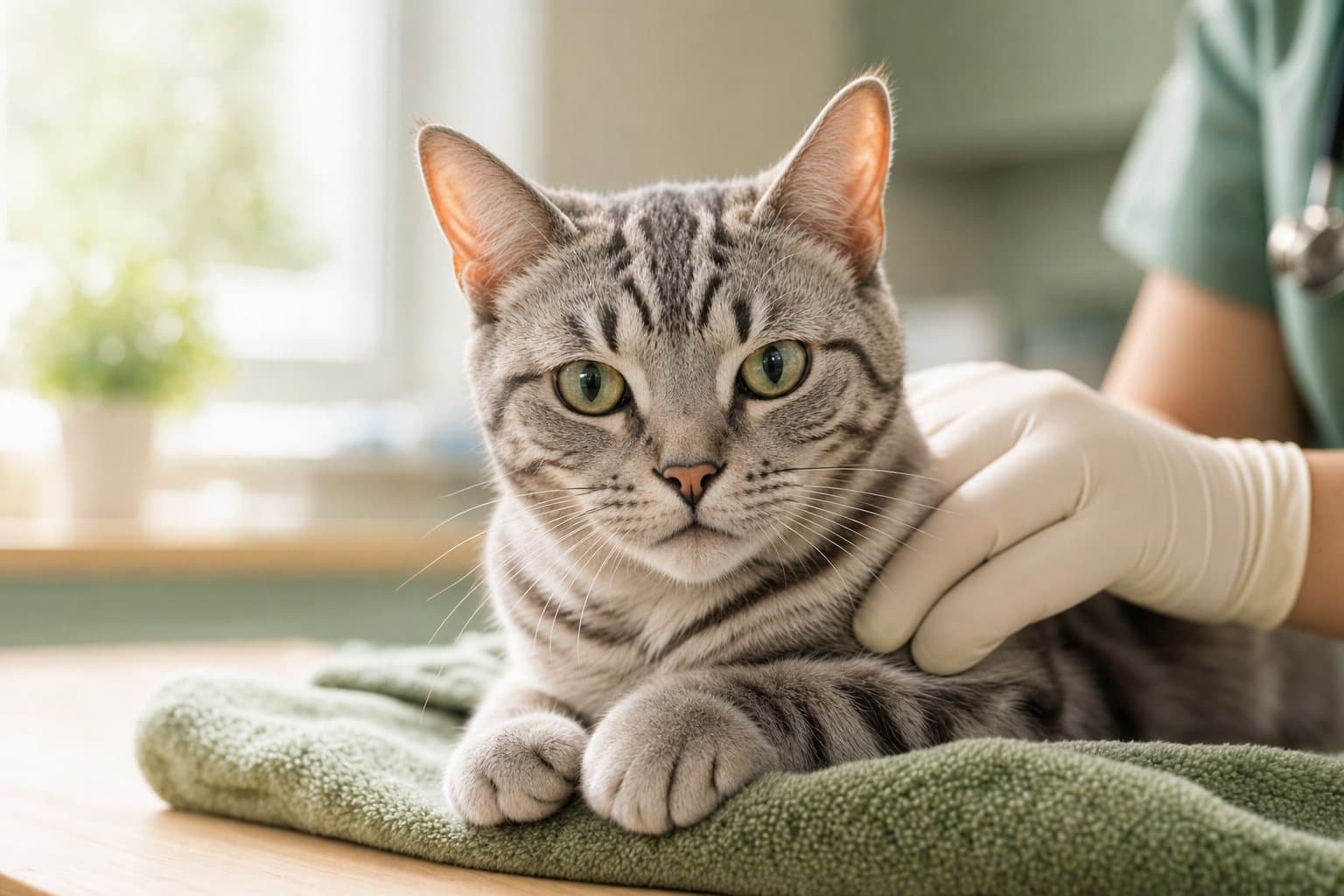
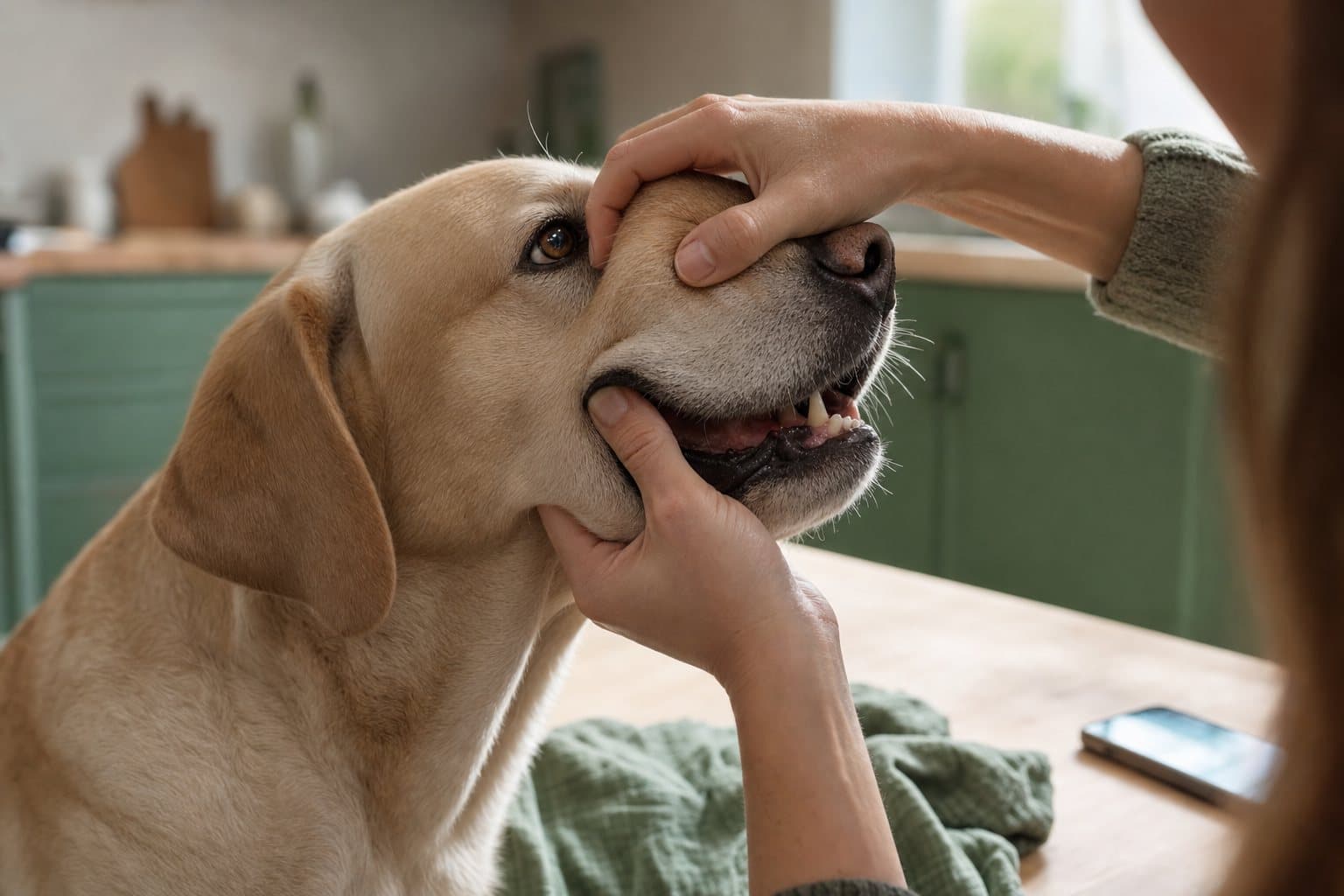
It's worth booking a check-up a few weeks before New Year's Eve, especially if your pet has reacted exceptionally badly to noise in the past, is getting on in years, has a diagnosed chronic condition, or you've simply never been through an evening like this together before. A vet who knows the animal's health history can help put together the right combination of measures, from behavioural approaches alone to, where justified, pharmacological support. Booking ahead, rather than on the 30th of December, gives you time to test the chosen approach before you actually need it.
New Year's Eve Day: Setting Up a Safe Space
A Safe Refuge
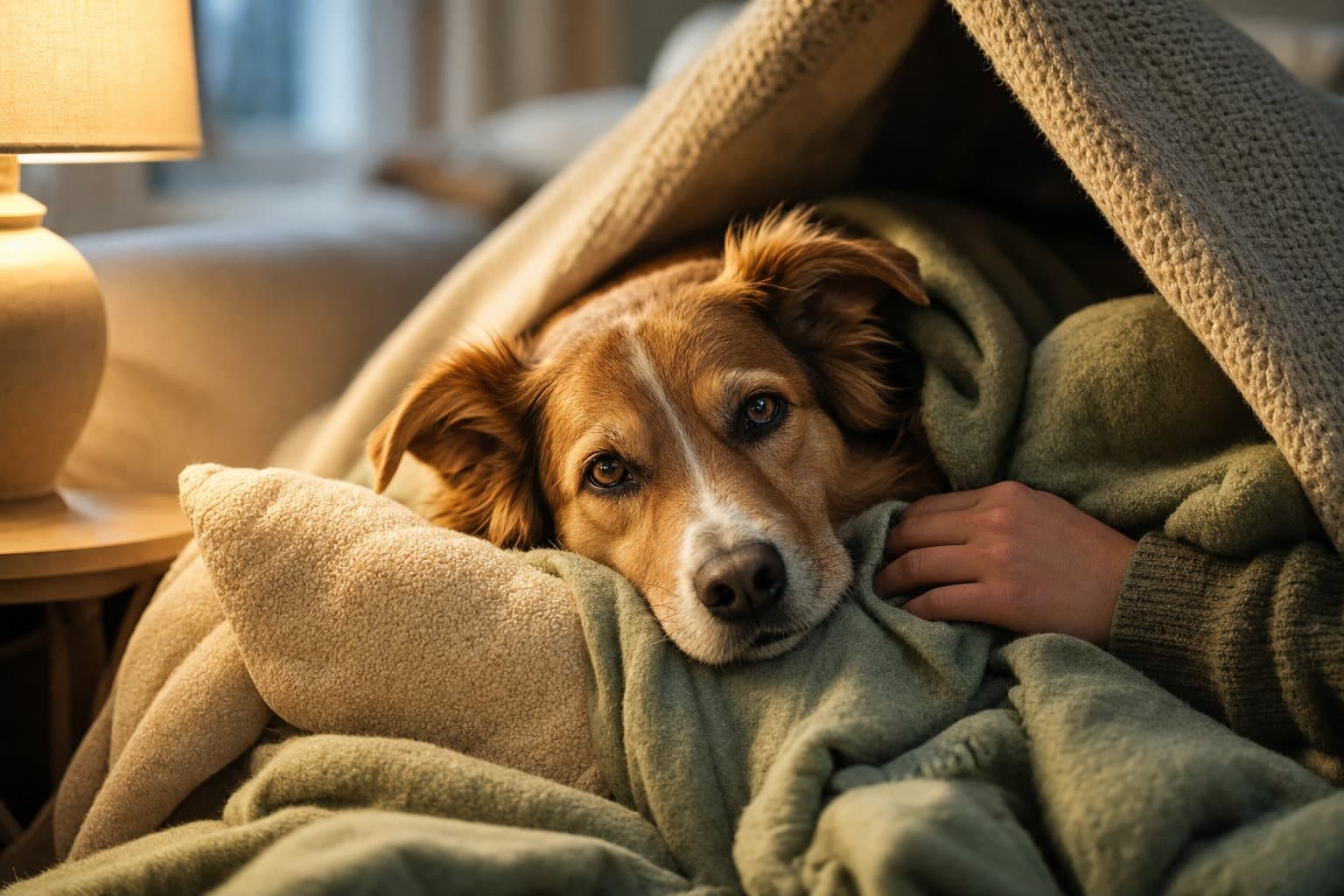
Every animal should have access to a place where it can hide and feel safe before the noise even starts. This could be a closed room with no windows facing the direction the bangs are loudest, a dog crate covered with a blanket, or a favourite bed set up in a quiet corner of the home. It helps to furnish this space with items the animal already knows, a blanket that carries its scent, a favourite toy, a bowl of water. Covering the windows with thick curtains or a blanket cuts down not just on sound but on the flashes of light, which can trigger anxiety on their own.
Masking Sound and Light
Turning on the television, radio, or some calm music can effectively mask a good part of the noise from outside. There are also playlists and recordings designed specifically to soothe animals, though an ordinary radio your pet already knows, playing in the background all evening, works just as well. Closing windows and balcony doors further dampens outside noise, and drawing curtains or blinds cuts down on the visible flashes that trigger a fear response in many animals, quite apart from the bangs themselves.
Tiredness Is Your Ally
A tired dog or cat is usually less prone to stress. It's worth planning a longer, more energetic walk during the day, well before dusk falls and the first bangs start, since an evening walk right in the middle of the noise already carries a real risk of panic and bolting, so a dog's last walk of the day is best taken in the early evening. For cats, an intense play session with a wand toy or laser pointer, tapping into their natural hunting instinct, works well, so that by evening the animal is physically and mentally tired rather than full of pent-up energy.
Walks in the Days Around New Year's Eve
In many towns and cities, stray bangers and rockets start going off several days before New Year's Eve itself and continue for several days afterwards, so it's worth being especially careful on walks throughout this whole period, not just on the evening of 31 December. Even a dog who normally walks off-lead and comes reliably when called should stay on a lead during these days; a single sudden bang can startle even a calm, well-trained animal enough that, for a split second, it forgets every command and bolts. It also helps to plan walking routes away from any locations known in advance to be hosting larger firework displays that year.
Security and Identification
Collar, ID Tag, Microchip
Before the evening gets underway, it's worth checking that your pet has:
- a collar with a tag showing an up-to-date phone number,
- a microchip registered in the appropriate database, with the owner's current contact details.
This matters enormously, because in a panic, even an animal that has never tried to run off before might bolt, and identification that's easy to read dramatically increases the chances of a quick return home.
Securing Your Home, Balcony, and Garden
Closed windows and doors are the basics, but it's also worth checking the condition of your garden fence, how secure the gate is, and whether the balcony is safe enough that a frightened animal can't fall from it or climb over it in a moment of panic. It's best to do this check a few days ahead of time, not on the evening of 31 December itself, when there's no time left to fix anything.
In homes with a garden, an added risk is leaving a dog outside overnight "because it has its kennel out there and is used to it." On New Year's Eve, it's worth making an exception to that rule and bringing the dog indoors, even if it normally spends most of its time in the garden. Panic, and attempts to jump or dig under a fence, happen even to dogs that have never tried to escape before. Flats on higher floors have their own particular risk profile: there, the main danger isn't so much escape as panic near a balcony or open window, so it's worth restricting the animal's access to those spots ahead of time.
Don't Leave Your Pet Alone
Animals feel safer in the company of the people who care for them. If at all possible, it's worth spending the evening at home, or asking someone you trust to stay with the animal if you have to go out. A calm, composed owner is reassuring to an animal; conversely, our own nervousness is often read by the animal as confirmation that something worrying is happening.
Guests, Children, and Open Doors
If you're hosting a New Year's Eve party or expecting guests, it's worth agreeing on some simple rules ahead of time: the door to the animal's safe room stays shut, ideally with a note asking people not to open it. Guests, children especially, might well want to look in on a frightened dog or cat with the best of intentions, "just to comfort it," and every time that door opens, there's a risk the stressed animal will seize the moment and bolt further into the flat, or worse, outside. It's also worth preparing both your household and your guests for the fact that the animal might not want any contact that evening, and that this is entirely normal, not a sign of bad manners or an unfriendly pet.
Pheromones, Herbal Products, and Calming Medication: What's Worth Knowing
Several categories of product are available on the market to support animals through difficult, stressful moments. Synthetic pheromones, such as Adaptil for dogs or Feliway for cats, available as diffusers, sprays, or collars, replicate scents similar to those animals naturally produce in calm, safe situations; in some animals they genuinely ease anxiety levels, though they work best when started well in advance rather than on the day itself. Herbal products based on lemon balm, valerian, or other calming herbs can be a helpful, mild, additional support for animals with a low or moderate level of anxiety.
For animals that react exceptionally badly to noise, a vet may consider prescription-only medication. Any decision to use a pharmacological product, even a seemingly mild one, should always be discussed with the treating vet, who knows the animal's health history and can judge whether a given product is appropriate and when, before the evening, it's best given. You should never give an animal medication intended for people, or a calming product meant for a different animal, based on guesswork and without consulting a vet; dosage, choice of substance, and possible interactions with other medication are always an individual medical decision, not something that can safely be worked out on your own based on advice from friends or the internet.
Never give an animal medication intended for people, or a calming product meant for a different animal, without consulting a vet first. Dosage and choice of substance are always an individual medical decision, not something to work out on your own.
If you already know today that your dog or cat copes terribly with fireworks, don't wait until the 30th of December to talk through your options. An early consultation gives you time to choose an approach and test it before you actually need it.
Calming Wraps and Other Physical Support
Alongside pheromones and herbal products, some dogs respond well to gentle, steady pressure around the torso, provided by specially designed calming wraps or vests. Exactly how they work isn't fully understood, but in many animals this kind of even pressure has a soothing effect, similar to swaddling or a firm hug. As with pheromones, it's worth trying a wrap in a calm, neutral situation first, rather than putting it on an animal for the very first time in the middle of the noise itself; for some animals, the experience of wearing an unfamiliar garment can itself be an added, unnecessary source of stress if they aren't already used to it.
What to Do While the Fireworks Are Going Off
Your Own Behaviour Matters
A calm, composed owner is one of the most effective ways to lower an animal's stress level. That doesn't mean pretending nothing is happening; you can quietly hold a dog who's seeking closeness, or sit quietly next to a cat who's hidden under the bed. What matters is not forcing an animal to confront something it's afraid of, and not dragging it out of its hiding place "to help it get used to things faster." An animal has the right to choose its own way of coping, as long as it's a safe one; your job is to provide that safety, not to decide on the animal's behalf how it should react.
Play and Distraction
For some animals, it helps to get them engaged in an activity that draws attention away from the noise: a snuffle mat or a treat-filled toy for a dog, a chew, or some quiet play with a cat, if it's in the mood for it. This approach works best for animals with a milder level of anxiety; for an animal in full-blown panic, trying to engage it in play usually doesn't work, and it's not worth insisting.
When to Step In and Call the Vet
If, despite every preparation, an animal falls into extreme panic, injures itself trying to escape, pants in a way that doesn't let up no matter how much time passes, or simply doesn't respond to its owner's presence at all, that's a sign to call the vet that same night rather than waiting until morning. Many clinics, ours included, have set procedures for emergency contact on nights like this; it's worth checking these in advance so you're not wasting time hunting for a number in a panic if you ever need it.
After New Year's Eve: Recovering
The morning of the 1st of January is a good moment to calmly assess how the animal came through the night: whether its appetite is back to normal, whether it's keen to go out for a walk, and whether there's any sign of injury from an attempt to escape. Some animals stay a little more alert or on edge than usual for the following days, which is a normal reaction to severe stress and usually settles on its own as everyday routine resumes. It's worth remembering that in some areas, fireworks continue for several more days, so it's not worth giving up the precautions you took for New Year's Eve itself too quickly.
Ideas for a Calm New Year's Eve for the Whole Family
- A firework-free New Year's Eve at home. If possible, organise a quiet evening with friends who also love animals and understand why you'd rather stay in that particular night.
- Mental and interactive games. A snuffle mat, a treat ball, or a puzzle game can keep a dog or cat productively occupied for part of the evening.
- A trip somewhere quieter. If you have the option, heading out of town, where firework noise is considerably less intense, can be a good solution both for the animal and for owners who themselves prefer a quieter celebration.
- Helping each other out as neighbours. If you know a neighbour is also staying in with their dog, it's worth considering spending the evening together; the company of a familiar animal can be an additional source of calm.
- Consulting a behaviourist. If your pet copes exceptionally badly with New Year's Eve, year after year, it's worth seeking advice from an animal behaviour specialist who can help put together a long-term, individual plan for working on the anxiety.
Frequently Asked Questions
My dog is already shaking and hiding several days before New Year's Eve, at the sound of a single banger. What should I do?
That's a sign it's worth starting preparations well ahead of time, rather than on the evening of 31 December itself. It's worth booking a vet visit to discuss the options available, from a safe space and habituation training through to, where justified, individually chosen pharmacological support.
Will pheromones definitely help my pet?
Pheromones help many animals lower their anxiety levels, but they're not a guaranteed or standalone solution. They work best as part of a broader plan, alongside a safe space, sound masking, and, where needed, a consultation with a vet, rather than as a fix on their own, separate from everything else.
Can I give my dog something "to calm it down" from a human pharmacy?
No. Medication intended for people can be dangerous for animals, even in seemingly small doses, and some substances used in humans are simply toxic to dogs and cats. Any pharmacological support should be chosen and prescribed by a vet who knows the individual animal's health history.
My cat has hidden and won't come out all night. Is that normal?
Yes, that's one of the most common reactions cats have to severe stress. It's best to leave the cat access to a safe hiding place, water, and a litter box nearby, avoid pulling it out by force, and let it emerge at its own pace once it senses the noise has stopped and it's safe again.
Should I stay home, or can I step out for a while if my pet has a secure safe space?
An owner's presence is, for most animals, an extra source of reassurance, so if it's at all possible, it's worth staying home, especially with an animal that copes badly with noise. If you do have to go out, it's a good idea to ask someone you trust to stay with the animal, rather than leaving it entirely alone in the flat.
How far ahead of New Year's Eve should I start preparations and habituation training?
The earlier, the better; ideally several weeks ahead, so desensitisation training can proceed gradually, without rushing. If you're starting later, it's still worth putting the basics in place, a safe space, sound masking, an earlier walk, even if there's no longer time for a full course of habituation training this year.
Does an older dog with a heart condition need special precautions?
Yes. In older animals and those with heart conditions, severe stress can place extra strain on the body, so it's worth talking to your vet ahead of time about an individual plan for the night, rather than relying on general advice alone.
New Year's Eve doesn't have to be a nightmare for our pets, though it does call for a bit of planning ahead of time rather than last-minute improvising. A safe space, sound masking, an earlier walk, up-to-date identification, and, where needed, an early conversation with a vet: all of this genuinely improves the odds that your dog or cat gets through the night calmly. If your pet has struggled with New Year's Eve noise in the past, or you'd simply like to talk through the options before the coming New Year, the team at the Hau-Miau clinic at ul. Siemieńskiego 23 in Warsaw's Ochota district is glad to help put together a plan suited to your animal. Book a visit — call +48 22 823 35 63.