A visit to the vet is often a very stressful event for both the cat and its owner. All it takes is pulling the carrier out of the cupboard, and your cat can vanish for a good half hour – under the bed, behind the wardrobe, into the darkest corner of the flat it can find. This isn't spite or "feline pettiness" – it's a natural reaction from an animal for which a change of environment, an unfamiliar smell, and the loss of control over the situation signal potential danger. Cats are naturally cautious and strongly attached to their own territory, and a trip to the vet disrupts almost everything that gives them a sense of security: familiar surroundings, control over who touches them and how, and the option to retreat if something feels alarming.
The good news is that this stress can largely be reduced. Not in a single day, and not with one trick, but through consistent, patient work spread across the weeks – sometimes months – leading up to the visit, plus a handful of simple rules to follow right before and during the examination. In this article we've gathered everything worth knowing so that a check-up, a vaccination, or a routine clinical examination is as low-stress an experience as possible for your cat – and for you: from choosing the right carrier, through getting your cat used to being touched and handled, to the scents that help calm a cat down, how to drive, and how to behave in the waiting room. We'll also show you what this looks like in practice at our Hau-Miau clinic at ul. Siemieńskiego 23 in Warsaw's Ochota district, and when a cat's stress stops being a mere inconvenience and becomes a signal that something more serious is going on – one that means the visit can't wait for a "better moment."
Why a Trip to the Vet Is Such a Big Stressor for Cats
A Cat Isn't a Small Dog – Different Psychology, Different Needs
Many people unconsciously apply expectations that work for dogs to cats too – assuming that an animal can be "settled into" a new place quickly, through exposure alone, and that the company of other animals or people is inherently calming. In reality, a cat is an animal for which control over its surroundings, and the ability to hide if something feels threatening, are essential to its sense of safety. Dogs are pack animals, evolutionarily adapted to functioning within a group and, to some extent, to relying on others. A cat, even a fully domesticated one deeply attached to its owner, still retains many traits of a solitary predator – and, at the same time, of potential prey for larger animals – which means it instinctively avoids situations where it has no way to escape or hide.
A veterinary practice combines pretty much every element a cat tries to avoid: unfamiliar smells (including the scent of other animals – which, from the cat's point of view, includes predators such as dogs), unfamiliar sounds, unfamiliar hands, no possibility of escape, and, on top of all that, physical restraint during the examination. It's no wonder that for many cats, the car journey to the clinic alone triggers a stronger stress response than the examination itself.
A Vicious Circle: The Carrier as a Sign That Something Bad Is About to Happen
For many cats, the carrier becomes associated purely with something unpleasant, because it appears in the house rarely, and almost always immediately precedes something stressful – a vet visit, a vaccination, sometimes travel. A cat learns this association very quickly: the mere sight of the carrier, before anything has even happened, is enough to trigger a flight or hiding response. As a result, every subsequent visit becomes harder, because on top of the stress of the examination itself comes the stress of the transport, the chase around the flat, and dragging the cat out of its hiding place by force – which only reinforces the negative association further. The good news is that this vicious circle can be broken by changing the carrier's role in your cat's everyday life – and that's the starting point for everything described below.
The Basics: The Right Carrier, and Getting Your Cat Used to It
Which Carrier to Choose
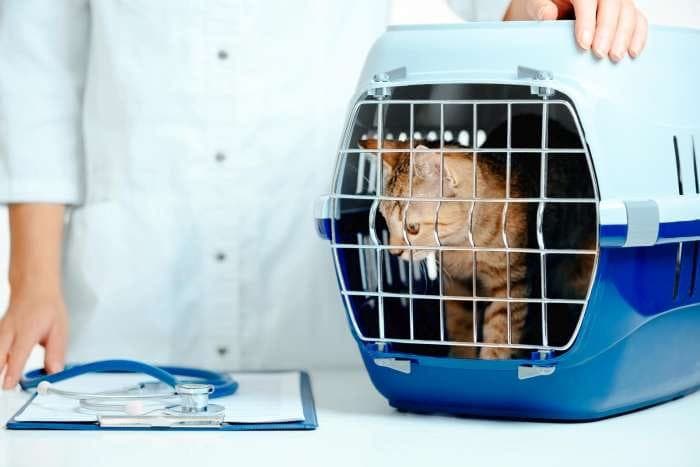
If you don't already have a suitable carrier, choose a hard plastic one with a removable top section. This makes a huge practical difference: during the examination, the vet can simply lift off the top of the carrier instead of pulling a frightened cat out through a narrow front opening. Many cats, who brace themselves and push their paws against the sides of a typical front-opening carrier, can be examined partly inside a top-opening one, without the added stress of being forcibly pulled out.
The carrier needs to be large enough for your cat to turn around, stand up, and lie down comfortably inside. A carrier that's too small is an additional source of discomfort for your cat, while one that's too large makes it harder for your cat to feel like it has a safe, contained refuge (which is why it's worth adding a blanket or cushion inside – more on that below).
Never carry or transport your cat to the practice in your arms. This is dangerous both for you and for your cat – a frightened animal can bolt at the least expected moment, and the risk of scratches, of your cat escaping onto the street, or of a road accident, is very real. Always use a stable, closable carrier, no matter how calm your cat usually is.
Soft Carrier Bags vs. Hard Carriers
Alongside classic hard plastic carriers, soft carrier bags are also available. They have their advantages – they're lighter, and easier to fold and store – but in our day-to-day work with cats, we more often recommend the hard, top-opening option. A soft bag usually doesn't allow for easy, partial opening from the top, and that's exactly the feature that does the most to make examining a badly frightened cat less stressful, because it lets the vet keep handling to an absolute minimum. If you do decide on a soft bag, make sure it has at least large mesh windows that allow free airflow and let you keep an eye on your cat, and that it can be opened from more than one side rather than only through a single small opening at the front.
Getting Your Cat Used to the Carrier, Step by Step
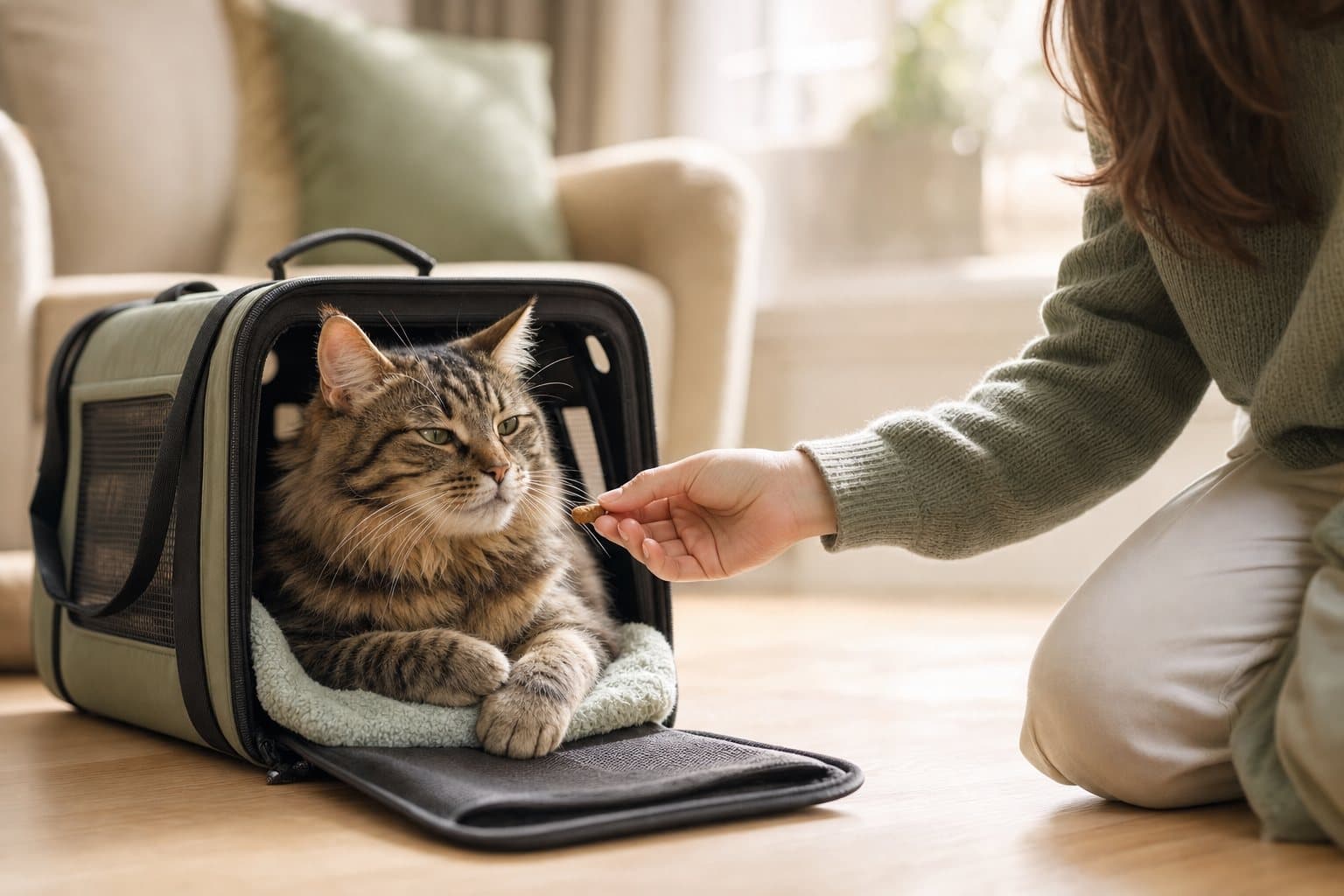
If your home allows it, put the open carrier on the floor a few days – ideally a few weeks – before the planned visit. In many homes, the carrier can simply stay on the floor permanently, as one of the everyday fixtures of the environment, rather than an object that appears out of nowhere right before something unpleasant. Put treats inside, favourite toys, and sometimes food too – so your cat comes to associate the carrier with something pleasant rather than a threat. Let your cat go in freely whenever it feels like it, and come out just as freely. Never force your cat into the carrier at this stage – doing so completely undoes the point of the habituation process and teaches your cat that the carrier is still a trap.
It's also a good idea to put a soft blanket or bed inside the carrier, ideally one that has already picked up your cat's scent, or the scent of your home. Some cats are more willing to use the carrier when it stands in a quiet, secluded spot, away from noisy household appliances, rather than in the middle of the living room or in a busy walkway.
What to Avoid During Habituation
The most common mistake is only getting the carrier out on the morning of the visit – for your cat, this is an unambiguous signal that something unpleasant is about to happen, and it naturally triggers fleeing and hiding. Another mistake is forcing your cat inside at the last minute, which heightens fear and makes future habituation attempts harder. It's also worth avoiding punishing your cat for fleeing or resisting – your cat isn't doing this out of spite, but out of genuine fear, and punishment only deepens the negative associations with the whole situation.
Getting Your Cat Used to Touch and Handling, Every Day
A Home Version of the Clinical Exam
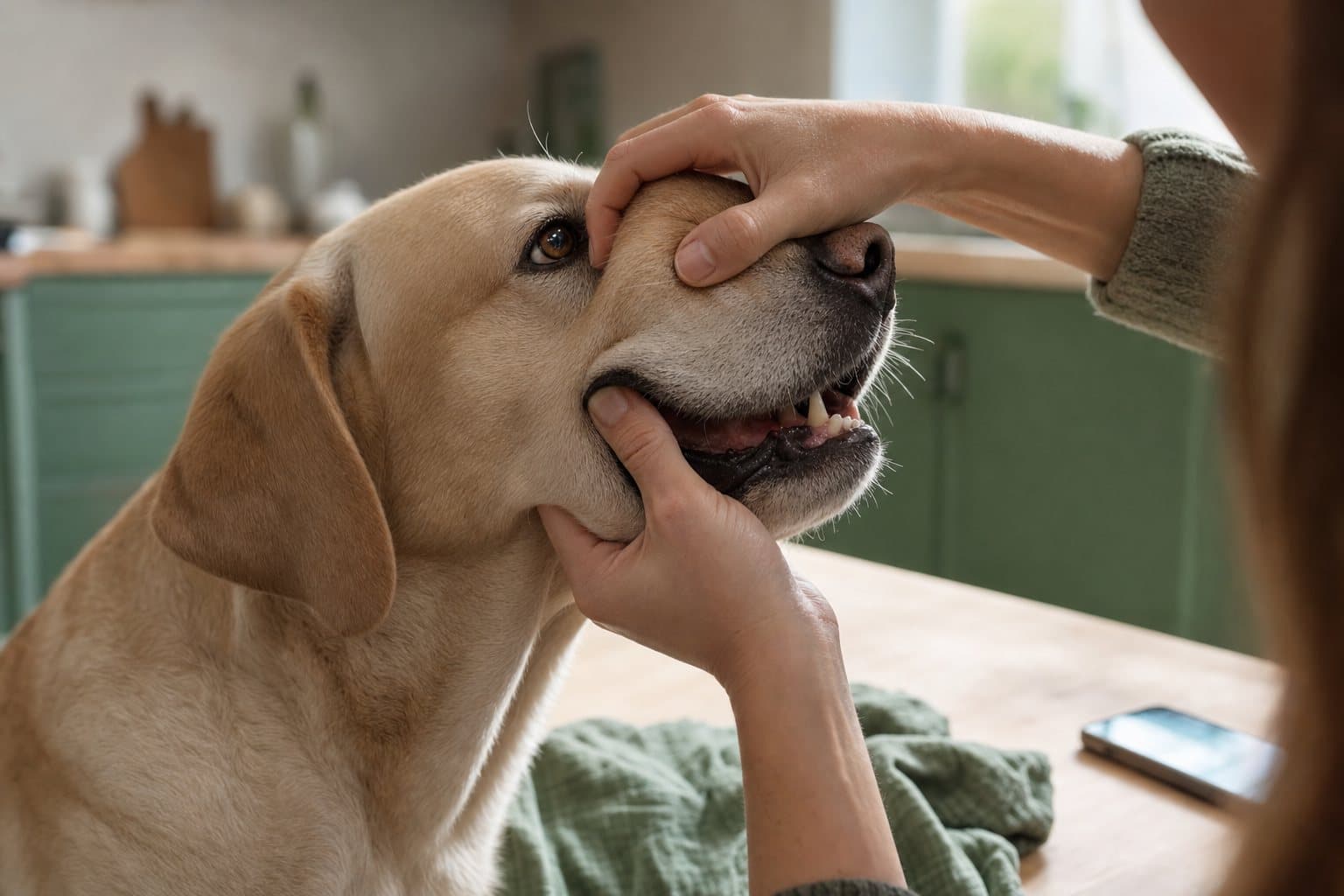
If you have a kitten, or your adult cat tolerates it, it's worth building short, pleasant "exercises" into your daily routine that mimic elements of a real clinical examination. Brush your cat's teeth with a special toothpaste made for pets (never human toothpaste – some of its ingredients are harmful to animals), look inside its mouth, gently lift its lip to check its teeth and gums. Check its eyes and ears, gently touch its paws, tummy, and tail. Keep it calm and brief, and always end with something pleasant – a treat, play, or a stroke your cat happily accepts.
If your cat tolerates it, you can also, every now and then, gently place it on the bathroom scale (weigh yourself first, then yourself holding your cat, and subtract the difference) – a simple way to keep a rough eye on its body weight at home between check-ups, and, as a bonus, another form of habituation to being handled and picked up.
Why This Works
Regular, short "check-ups" at home teach your cat that being touched by hands – in ways other than simple stroking on the head or back – doesn't have to mean anything bad. As a result, when the vet performs similar actions in the consulting room, your cat already has some experience and associations that help it stay relatively calm. This is also a genuine safety benefit during the exam itself – a cat used to being handled is less likely to struggle violently, which reduces the risk of scratches or accidental injury to both the animal and the people examining it.
Food, Treats, and Rewards in the Habituation Process
Choosing the Right Treats
How well habituation works largely depends on whether the reward you're offering your cat genuinely interests it. Ordinary dry food that your cat eats every day is often not enough of an incentive to do something new or unsettling – it's worth setting something special aside purely for training and habituation: a piece of cooked meat, a treat you buy only rarely, or a treat paste offered from your finger or a spoon. The higher the "value" of the reward from your cat's point of view, the easier it is to overcome its natural wariness of the carrier, or of being touched somewhere new.
The Small-Steps Rule
Habituation works best when you break it down into very small, easy-to-accept steps, and reward your cat immediately after each one, however small the progress – your cat approaches the open carrier: a treat. Your cat puts a paw inside: a treat. Your cat goes all the way in and has a look around: a treat and calm praise. If at any stage your cat backs off or shows clear unease, that's a sign to go back to the previous, easier step, rather than forcing further progress. Patience at this stage usually pays off later, at the real visit.
When Rewards Don't Work
Sometimes a frightened cat simply isn't interested in food at all – this is a natural response of a body under intense stress, in which the drive to eat takes a back seat to the sense of threat. If your cat refuses treats in the presence of the carrier, that's a sign that its stress level is currently too high, and it's worth stepping back to an easier stage – for instance, simply keeping the carrier in the room, further away from your cat, before trying to encourage it to come closer.
Scents That Calm: Pheromones and the Familiar Smell of Home
Synthetic Pheromones
Cats largely communicate, and orient themselves in their surroundings, through scent – including pheromones, chemical substances they leave behind, for example, when they rub their cheek against furniture, door frames, or their owners' legs. These facial pheromones are associated with familiar, safe places and situations. Based on this, products containing synthetic versions of these pheromones have been developed, available among other things as a spray (e.g. Feliway) or a collar (e.g. Settle Down), designed to help a cat feel more confident in a new or stressful environment.
It's worth spraying the carrier, as well as the inside of the car, about 30 minutes before putting your cat inside – that's roughly how long it takes for the carrier solvent to evaporate, leaving just the pheromone behind in the air. If your cat tolerates wearing a collar, a pheromone collar can be fitted in advance, ideally around a week before the expected visit, so it has time to take effect before it's actually needed.
An Item of Clothing That Smells of Home
A good addition is placing one of your own, previously worn items of clothing inside the carrier – an old t-shirt, for example, that has picked up your scent (ideally not fresh out of the wash, since then it mostly smells of detergent rather than you and your home). Bear in mind, though, that at the practice such a t-shirt may get dirty, or pick up the smell of the clinic strongly enough that you won't always get it back in a state fit for further wear – so it's worth setting aside something for this purpose that you won't mind losing.
Pheromones and familiar scents help many cats settle, but they don't work identically on every animal, and they don't replace gradual habituation to the carrier and to touch. If, despite these measures, your cat still reacts with intense, prolonged fear – not just during visits, but in other situations too – talk to your vet about it. In some cases, an additional behavioural consultation is helpful, and sometimes so is individually tailored pharmacological support, prescribed by a vet.
Safe Car Travel
Securing the Carrier
If you're travelling with your cat by car, make sure to secure the carrier against sliding around or tipping over while driving. It's best placed low, behind the front seat, where it's less exposed to tilting during braking or turning, and further secured with a seatbelt, or braced against the seat back so it can't slide. A carrier left loose on the back seat can slide with every bit of braking, which is an entirely unnecessary extra source of stress for your cat, and potentially dangerous.
How You Drive
Drive as smoothly as possible, without sudden acceleration, braking, or sharp turns – your cat feels all of this far more intensely than a passenger strapped in with a seatbelt, since it has no way to adjust to what's happening or understand it. It's also worth avoiding loud music or hands-free phone calls, and, where possible, keeping the car at a moderate temperature – not too hot in summer, not too cold in winter – and avoiding placing the carrier somewhere in direct sunlight.
Limiting Visual Stimulation
Cover the carrier, with a towel for example, to limit your cat's field of view – paradoxically, the less your cat can see from outside, the fewer reasons it has to be afraid, since it isn't watching cars, people, or other animals go by outside the window. If it's cold, cover the carrier with an extra blanket, or use a cover if your carrier model has one – just make sure to maintain proper ventilation and avoid covering the air vents completely.
At the Practice: Waiting Room and Consulting Room
Keep the Carrier Raised, Not on the Floor
Never put the carrier with your cat inside directly on the floor in the waiting room. At floor level, your cat is exactly at the height of a dog's muzzle, and the presence of a dog – even a calm one on a lead – can feel like a direct threat to your cat. Place the carrier on a chair, on your lap, or ask reception staff to point you to a raised spot. Many practices, including ours, try to arrange the waiting room so that cats and dogs have, as far as possible, separate spaces, or at least a safe distance between them.
Behaviour Around Other Animals
Try to keep your distance from other patients in the waiting room, especially dogs, and don't remove the cover from the carrier unless you need to – the fewer stimuli reach your cat at this point, the better. If you notice a dog or another patient getting too close, calmly ask them to keep their distance, or, if possible, ask reception for a spot off to the side, away from the flow of traffic.
What Happens in the Consulting Room
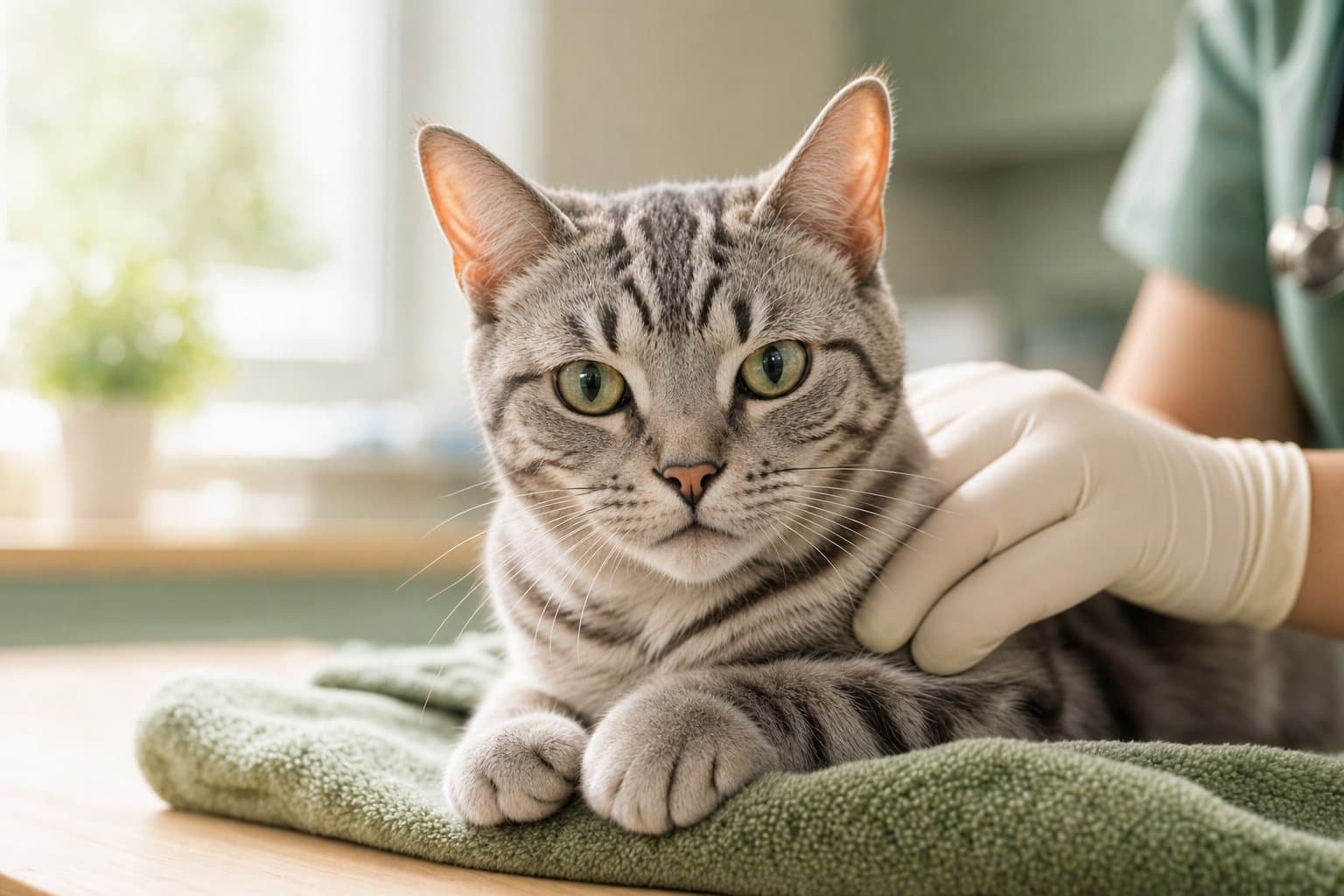
A typical clinical examination of a cat usually includes weighing, an assessment of overall condition and coat, listening to the heart and lungs, palpating the abdomen, checking the mouth, eyes, and ears, and checking the lymph nodes. Thanks to your cat already being used to similar handling at home, the visit itself usually goes much more smoothly and with far less stress – for the animal and for the team examining it alike.
What to Bring to the Visit
Preparing a few small things before you leave home can save time and extra stress once you're there. It's worth bringing your cat's health record or passport (if it has one), information about its current diet and any medications or supplements, and a short list of questions you want to ask the vet – in a stressful situation it's easy to forget something, and a list written in advance helps make sure nothing gets missed. Your cat's favourite treat is also useful, along with, if you use one, a pheromone spray to freshen up the inside of the carrier just before going into the consulting room.
Familiarisation Visits – Getting Used to the Place Itself
If you can, it's worth occasionally bringing your cat to the practice purely to get used to it – with no examination at all. Bring along its favourite treats and toys. It's worth letting the vet or reception know beforehand that you'd like to do this kind of familiarisation visit – staff can suggest which hours tend to be quietest at the practice, to limit the number of stimuli and increase the chances that your cat comes to associate the place with something neutral, or even pleasant. This kind of visit is usually free of charge, unless it turns out to be necessary, or you decide, during the visit, that you'd like a full clinical examination carried out.
In our experience at the Hau-Miau clinic, even a few such short, "harmless" visits a year can noticeably change a cat's attitude to the whole idea of going to the vet – especially combined with consistent habituation to the carrier at home.
Your Calm Is Your Cat's Calm
Cats are very attuned to their owners' emotions and body language. If you're tense, anxious, speaking in a raised voice, or moving around nervously, your cat picks up on these signals and responds with similar tension – even if the situation itself isn't yet objectively threatening to it. Try to speak in a calm, low voice, move without rushing, and avoid over-anxious, high-pitched reassurance, since – paradoxically – that can be read as confirmation that something worrying is indeed happening.
This doesn't mean you have to suppress your own emotions, or pretend you feel nothing – it's more about consciously slowing down your movements, your breathing, and your tone of voice, as far as you're able. It's one of those things that costs nothing, yet genuinely lowers stress levels on both sides of the carrier.
This is worth keeping in mind, too, whenever more than one person – including children – comes along to the practice with your cat. Calmly explain to family members that it's best to stay quiet in the waiting room and consulting room, not to keep peering into the carrier, and not to try to stroke a stressed cat "to comfort it" – sometimes the most helpful thing you can do is simply give the animal a moment of peace, rather than have the whole family focus its attention on it at once.
Coming Home: Decompressing and Getting Back to Routine
Time to Settle
Once you're back from the practice, let your cat decide for itself when to come out of the carrier and where to go. Make sure water, food, and the litter tray are available, but don't force your cat into immediate contact or play. Some cats need a few minutes, others a few hours, to fully regain their balance after the stress of a trip away from home.
Reintroducing Your Cat to the Rest of the Group
In homes with more than one cat, coming back from the practice can be an added source of tension. A cat returning from a visit brings unfamiliar smells with it – the practice, other animals, disinfectants – which can trigger wariness, and sometimes even aggression, from the cats that stayed home. If you notice hissing, avoidance, or tension from your other cats towards the one coming back from the vet, don't force immediate contact. It helps to keep the returning cat separate for a while in its own room, gently wipe it down with a towel previously used by the resident cats (to "blend" the scents), or use a pheromone diffuser in the house. A gradual, controlled reintroduction, spread over several hours or even days, usually works better than forcing immediate "acceptance" of the other cat's presence.
Special Situations: Kittens, Senior Cats, and Multi-Cat Homes
Kittens
The earlier you start habituation to the carrier, to touch, and to short trips, the easier things will be in adulthood – young cats go through a period in which they take on new, neutral, or positive associations relatively easily. This is also a good time to get your kitten used to tooth brushing, having its paws checked, and being held briefly and calmly.
Senior Cats
Older cats often need more frequent check-ups to monitor chronic conditions, which is exactly why it's worth making the whole process easier for them – more patience during handling, a soft, warm covering in the carrier, and avoiding overly long waits in the waiting room can all genuinely improve the comfort of these visits.
Multi-Cat Households
If more than one cat lives in your home, it's worth, where possible, transporting them in separate carriers, even if they're travelling together in one car – this limits the risk of one cat's stress "spreading" to the other during the journey or in the waiting room.
When There's No Time for Habituation – A Genuine Emergency
All the methods described above apply to planned situations – a vaccination, a check-up, a preventive examination. If your cat is struggling to breathe, can't urinate (especially in male cats), is repeatedly and intensely vomiting, has suffered an injury, is unconscious, is bleeding heavily, or you suspect a life-threatening condition for any other reason – skip every stage of gradual habituation. Wrap your cat in a towel or blanket if you don't have a carrier to hand, and get to the practice, or the nearest 24-hour veterinary emergency service, as fast as you can. In situations like this, what matters is time, not whether your cat has had a chance to calm down.
Frequently Asked Questions
How long before a visit should I start getting my cat used to the carrier?
The earlier, the better – ideally, the carrier should be a permanent fixture in your cat's environment, not an object that only appears before visits. If you know about a planned visit in advance, it's worth starting more intensive habituation at least a few weeks beforehand, though in many cases it's simply better to keep the carrier open in the house permanently.
What should I do if my cat runs away and hides at the mere sight of the carrier?
That's a sign the carrier is associated purely with something bad, and it's worth taking a step back in the habituation process – for example, starting by leaving the empty, open carrier in a quiet spot for an extended period, with no attempts at all to put your cat inside, and building positive associations solely through treats and play near it. If the fear is very intense and doesn't ease despite patient attempts, it's worth talking to your vet about it – sometimes an additional behavioural consultation helps.
Can I take my cat to the vet without a carrier – for example, in a bag or in my arms?
We don't recommend this, for safety reasons – both yours and your cat's. A frightened animal can bolt at an unexpected moment, for instance while opening the car door or entering the practice, risking escape onto the street, getting lost, or an accident. A stable, closable carrier is an absolute must for safely transporting a cat.
Will pheromones definitely solve my cat's stress problem?
Synthetic pheromones, such as a spray or a pheromone collar, help many cats settle, but they're not a universal solution that works identically for every animal. They work best combined with gradual habituation to the carrier and to touch. If your cat still reacts with intense fear despite all these measures, consult your vet.
Can I give my cat a sedative before a visit on my own initiative?
No. Don't give your cat any sedatives, herbal preparations, or – even less so – human medications without a clear recommendation and dosing instructions from a vet. Some substances that are safe for people are harmful, or even toxic, to cats. If you suspect your cat needs extra support because of intense fear around visits, talk to your vet about it beforehand – they'll assess whether, and what kind of, approach is appropriate in your particular case.
How should I prepare a household with several cats for a visit?
If possible, transport each cat in its own carrier, even if you're travelling together in one car – this limits the spread of stress between animals. Once you're home, watch how your other cats behave towards the one that went to the vet, and if needed, allow for a gradual, calm reintroduction rather than forcing immediate contact.
What should I do if the visit is urgent and there's no time for any habituation at all?
In a life-threatening situation, safety and time matter more than psychological comfort around transport. Wrap your cat in a towel or blanket if you don't have a carrier to hand, and get to a veterinary practice as quickly as possible. Symptoms such as difficulty breathing, inability to urinate, injury, heavy bleeding, or loss of consciousness always call for immediate veterinary attention.
A trip to the vet will probably never become your cat's favourite part of the day – and that's entirely normal. The point of the methods described above isn't to make your cat love visits to the practice, but to genuinely lower its stress levels enough that the examination goes safely, smoothly, and without unnecessary trauma for the animal or its owner. A carrier that's a permanent, familiar fixture at home, a calm and consistent routine of getting used to touch, a little help from pheromones and familiar scents, and your own composure – all of this genuinely adds up, and pays off over time, even if not immediately, and not at the same pace for every cat. At the Hau-Miau clinic at ul. Siemieńskiego 23 in Warsaw's Ochota district, we work every day with cats at very different stages of getting used to visits, and we always try to match the pace of the examination to what each individual animal can handle – if you'd like to talk through how best to prepare your cat for its next visit, or book a familiarisation visit, we're glad to help. Book a visit — call +48 22 823 35 63.