Blood in a cat's urine is one of those symptoms that can frighten an owner more than many genuinely serious illnesses – because you can see it with your own eyes, in the litter box or on the floor, and it immediately brings the worst scenarios to mind. Sometimes it really is something serious. Sometimes it's something that can be managed with diet and patience. And sometimes – as in Franek's story, which we describe below – only a full diagnostic work-up reveals what's actually going on. This article is both an account of a real case we had the privilege of managing at our clinic, and an extensive guide to bladder stones in cats: where they come from, how they're diagnosed, how they're treated, and how to reduce the risk of them coming back. We're deliberately describing this story step by step, the way it unfolded from our side of the exam table – including the ambiguous findings of the first tests – because real-world diagnostics rarely follow a neat, textbook path. Sometimes you have to repeat a test, wait a little, look from a different angle, before the picture becomes clear.
Franek's Story: Blood in the Urine and Frequent Urination in a Four-Year-Old
The First Visit and Ultrasound Examination
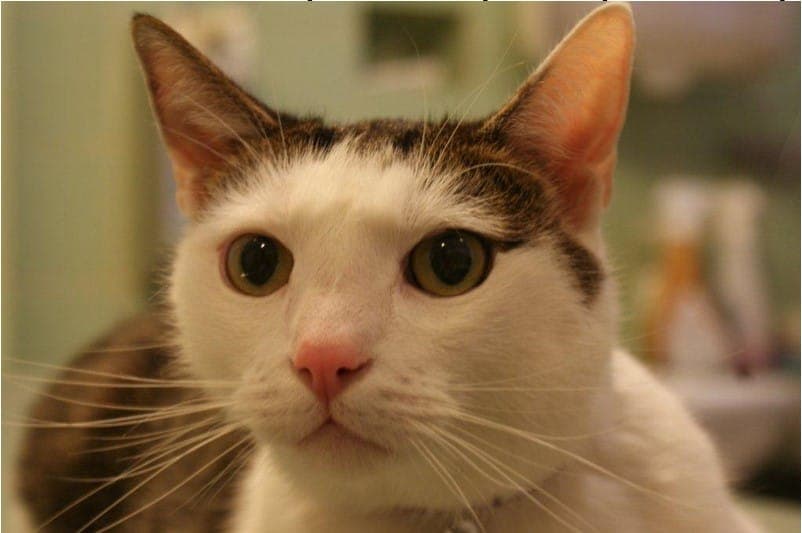
The cat "Franek", a 4-year-old neutered mixed-breed, came to our clinic after developing blood in his urine and frequent urination. Otherwise, Franek was in good general condition and had a healthy appetite, which was itself an important piece of information – an animal that is weak, feverish, or losing its appetite always raises more concern and speeds up diagnostic decisions. The clinical examination showed no abnormalities beyond the urinary tract issue itself.
During the first visit we performed an ultrasound (USG) examination, which revealed a mineralised deposit in the urinary bladder measuring approximately 1 x 0.4 cm. Unfortunately, because there was very little urine in the bladder at the time of the scan, we couldn't immediately determine with certainty whether the stone was free-floating, attached to the bladder wall, or perhaps just bowel content overlapping the bladder in the image. This is a fairly typical situation in ultrasound diagnostics – the picture can be ambiguous when there's little fluid in the organ, and the scan often needs to be repeated under different conditions.
Urinalysis Results
Franio was given pain relief and antispasmodic medication, along with other drugs that brought him some relief and allowed him to urinate in larger amounts. His owners managed to catch a urine sample for testing. Below are the results:
specific gravity (SG) 1.023 (L)
colour: bloody
clarity: turbid
reaction: neutral (pH)
protein: 262
glucose, ketones: (-)
blood pigments: (++++)
bile pigments: (-)
urobilinogen: normal
urine sediment: abundant, bloody, stable
epithelial cells: polygonal and round, single in the smear
leukocytes: 0-1 per high-power field (hpf)
erythrocytes: densely covering the field per hpf — fresh, altered, and leached (ghost) cells
casts, crystals: none found
bacterial flora: moderate
After treatment, Franek alternated between passing normal, yellow urine and, occasionally, urine tinged with blood. It's worth noting one detail we'll come back to later in this article: no crystals at all were found in the urinalysis, even though – as it later turned out – there was a real, hard stone sitting in his bladder.
The Second Ultrasound and X-ray Confirmation
We repeated the ultrasound scan, but it turned out there was once again very little urine in the bladder. We decided to give him a diuretic and wait a while, hoping Franek wouldn't relieve himself into the carrier before we could repeat the scan. About twenty minutes after the injection, we repeated the ultrasound and this time saw the stone floating freely inside the bladder – which finally resolved the uncertainty from the first examination.
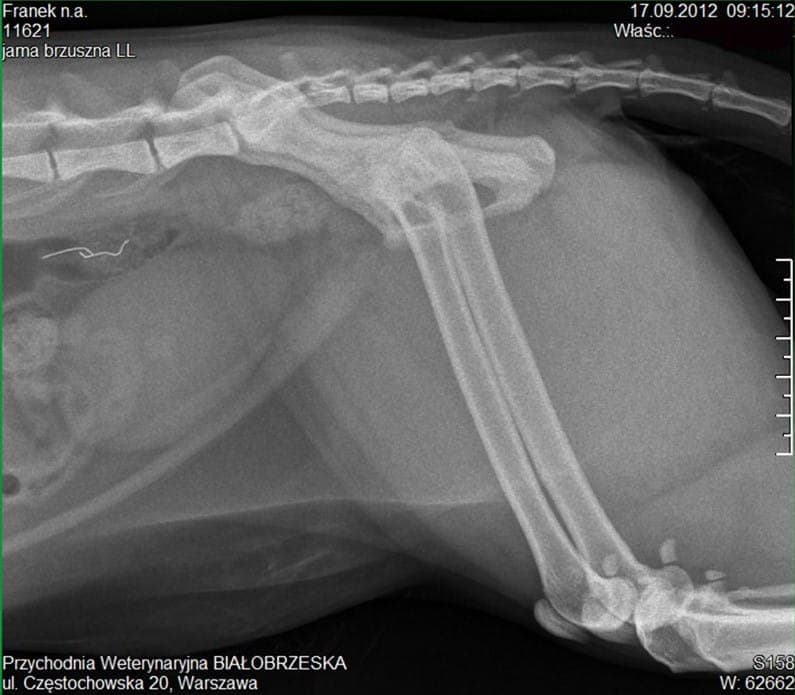
To confirm the presence of the stone, Franio was also referred for an X-ray of the urinary tract, which likewise confirmed it. We wanted to be certain of the diagnosis before deciding on possible surgery – in veterinary medicine, just as in human medicine, it's worth having more than one imaging method to rely on before committing to a surgical intervention.
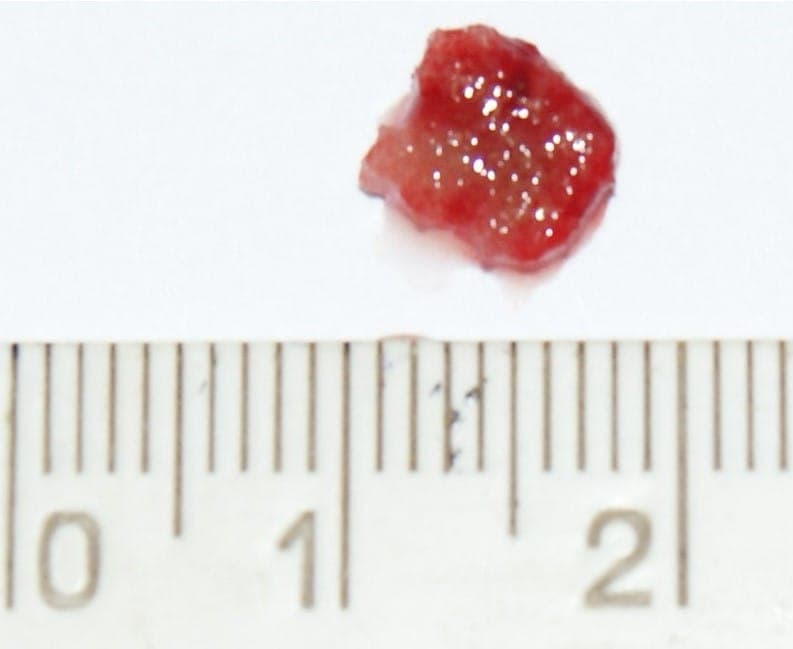
Since no crystals were found in Franek's urine, we didn't know the exact mineral composition of the stone in his bladder. That gap in knowledge had a direct bearing on how we chose to proceed.
Two Treatment Options
The owners were given a choice between two courses of action:
- Feeding a urine-acidifying diet that dissolves mineralised deposits in the bladder, under regular ultrasound monitoring. This approach would likely take several months and carried the risk of recurrent bladder inflammation and further episodes of blood in the urine. What's more, without knowing the exact mineral composition of the stone, choosing the right food would carry a degree of uncertainty.
- Performing a cystotomy (a surgical opening of the urinary bladder) to remove the stone, which would then be sent for laboratory analysis – and the results of that analysis would let us choose a targeted diet to minimise the risk of recurrence.
Surgery and Recovery
The owners chose option two. On 24 September 2012, Franek underwent a cystotomy. During the procedure, the stone was removed and sent off for laboratory analysis. Afterwards, Franio was looking forward to having his stitches out and – probably most important to him – having the protective collar removed, since it stopped him from washing himself. Franek recovered very well and returned to normal, healthy urination.
This case is a good illustration of an important principle: urinalysis, while essential, doesn't always detect crystals even when a fully formed stone is already present in the bladder. That's why an ultrasound examination is such a crucial part of the diagnostic work-up in animals with lower urinary tract symptoms, rather than merely an optional extra.
What Are Bladder Stones (Urolithiasis) in Cats
FLUTD – The Bigger Picture of Feline Lower Urinary Tract Disease
Bladder stones are one part of a broader group of conditions known by the acronym FLUTD (Feline Lower Urinary Tract Disease). Under this umbrella term sit several distinct conditions that often produce very similar symptoms: urolithiasis (the presence of mineral stones), feline idiopathic cystitis (FIC – a condition in which, despite the absence of infection or stones, painful bladder inflammation develops, strongly linked to stress), urethral plugs (mucus-and-mineral obstructions that block the flow of urine, particularly dangerous in male cats), and bacterial urinary tract infections, which occur less often in cats than in dogs but do happen. From an owner's point of view, all of these conditions can look very similar – a cat visits the litter box more often, passing small amounts of urine each time, sometimes tinged with blood, sometimes urinating outside the box entirely. That's why identifying the actual cause always requires an examination by a veterinarian, not guesswork based on symptoms alone.
How Bladder Stones Form
Urinary stones (also called uroliths) form when urine becomes supersaturated with certain minerals, which begin to crystallise and then combine into larger structures. This is a process that depends on several factors at once: the concentration of specific minerals in the urine, urine pH, how much water the cat drinks (and therefore how dilute the urine is), how long urine sits in the bladder, and sometimes the presence of bacteria, which can favour the formation of certain types of stones. Stones can range in size from fine sand (microscopic crystals, visible only under a microscope) all the way up to stones the size described in Franek's case, and in extreme cases even larger.
Bladder Stones vs. Kidney and Ureteral Stones
It's worth distinguishing bladder stones from stones located further up the urinary tract, in the kidneys or ureters. Stones in the bladder, as in Franek's case, typically produce symptoms related to urination itself – blood in the urine, frequent urination, discomfort. Stones sitting in the kidneys can remain clinically silent for a long time and are sometimes discovered incidentally during imaging performed for another reason, while a stone that migrates and blocks a ureter (the tube connecting a kidney to the bladder) can lead to far more serious consequences, including damage to the kidney on the blocked side. For this reason, an abdominal ultrasound in a cat with urinary symptoms usually assesses not just the bladder, but also the kidneys and, where possible, the course of the ureters – so as not to miss a problem located higher up than the bladder alone.
Types of Urinary Stones in Cats
Not all urinary stones are the same, and telling them apart matters a great deal in practice – because it determines whether dissolving the stone through diet is even an option, or whether surgery is the only route.
Struvite Stones
Struvite stones, made of magnesium ammonium phosphate, are one of the most commonly diagnosed types of stone in cats. They typically form in alkaline urine, and their formation can also be encouraged by the presence of certain bacteria. The good news is that struvite stones – unlike some other types – can often be dissolved with an appropriately chosen therapeutic diet, under regular veterinary monitoring and imaging, without the need for surgery. This isn't a rule without exceptions, though – whether conservative treatment is appropriate in a particular case is always a decision made by the treating vet based on the full clinical picture.
Calcium Oxalate Stones
Calcium oxalate stones are the second most frequently diagnosed type in cats. Unlike struvite, this type of stone generally does not dissolve with diet – once a calcium oxalate stone has formed, it remains a stone, and the only way to remove it is a procedure (surgical, or in some referral centres, other minimally invasive techniques). Diet can, however, play an important preventive role, reducing the risk of new stones forming in the future.
Rarer Types of Stones
Beyond these two most commonly encountered types, cats are also occasionally diagnosed with rarer kinds of stones – including urate and cystine stones. These tend to be linked to specific metabolic or genetic predispositions in the individual animal. Diagnosing and treating them usually calls for a more individualised approach and, as in Franek's case, laboratory analysis of the material that's removed.
Why the Composition of the Stone Matters
Franek's story illustrates this very well: until we know the exact composition of a stone, it's hard to properly plan conservative treatment, because a diet designed to dissolve struvite won't help with a stone made mainly of calcium oxalate, and vice versa. That's why it's so important for every surgically removed stone (or stone material collected by any other method) to be sent for laboratory analysis. The results don't just help us understand what happened – they let us plan the diet and monitoring that will help prevent a recurrence.
Causes and Risk Factors for Feline Urolithiasis
Diet and Urine pH
Diet has a direct effect on the mineral composition and pH of urine, and therefore, indirectly, on the risk of different types of stones forming. This is one reason why food choices for a cat with a history of urinary problems should be discussed with a vet, rather than settled by trial and error based on opinions found online.
Insufficient Water Intake
Cats descend from desert-dwelling ancestors and are evolutionarily adapted to drinking small amounts of water, which worked well when most of their moisture came from prey. In a modern household, on a diet based mainly on dry food, many cats drink noticeably less water than they actually need, which leads to more concentrated urine – and concentrated urine is an environment that favours mineral crystallisation.
Obesity and Low Physical Activity
Overweight, sedentary cats tend to use the litter box less often, stay in one position longer, and generally lead a less varied lifestyle, which – combined with other factors – can encourage urine to sit in the bladder longer, potentially increasing the risk of urinary problems.
Breed and Individual Predispositions
Some breeds and bloodlines appear to struggle with urinary problems more often than others, though in clinical practice bladder stones affect purebred cats and mixed-breeds, males and females, and animals of every age. Franek, the subject of our story, was an ordinary mixed-breed cat – a good illustration that it's not safe to assume a problem "doesn't apply" to your cat just because it isn't a breed considered more predisposed.
Urinary Tract Infections
Bacterial urinary tract infections can encourage the formation of certain types of stones (especially struvite), while also, on their own, producing symptoms very similar to urolithiasis – blood in the urine, frequent urination, discomfort while urinating. That's why a urinalysis, ideally together with a culture, is an important part of a complete diagnostic work-up, regardless of whether a stone is already visible on imaging.
Stress and Idiopathic Cystitis
In cats, there is a strong, well-documented link between stress and urinary tract health. Changes in the environment, conflicts with other cats in the household, a dirty or poorly placed litter box, or a monotonous environment lacking in stimulation can all contribute to the development of feline idiopathic cystitis, and, according to some clinical observations, may also heighten the risk of episodes linked to urolithiasis. Enriching a cat's environment with places to climb, toys, scratching posts, and a calm, clean, conveniently located litter box is a preventive measure that's often overlooked when owners focus solely on diet.
Symptoms That Should Concern an Owner
Typical Warning Signs
The symptoms of bladder stones and other conditions in the FLUTD group can look very similar to one another, so any of the following signs should prompt a visit to the vet:
- blood in the urine – urine tinged pink, red, or distinctly bloody,
- frequent urination – more frequent trips to the litter box than usual, often passing only a small amount of urine each time,
- straining and visible effort while urinating,
- urinating outside the litter box, especially in a cat that was previously fully litter-trained,
- excessive licking around the urethral opening,
- visible discomfort, meowing during or right after urinating,
- lethargy, reduced appetite, and in some cases vomiting.
Emergency: Urethral Obstruction in Male Cats
A blocked urethra in a male cat is always an emergency, life-threatening situation. The narrow, long urethra of male cats is far more prone to becoming blocked by stones, mucus-and-mineral plugs, or swelling than that of female cats. If a male cat repeatedly and unsuccessfully assumes the position to urinate, meows loudly in the litter box, seems distressed, and yet no urine is produced – that's a situation requiring immediate veterinary help, ideally that same day, not "let's wait and see until tomorrow." Left untreated, an obstruction can quickly lead to serious, body-wide complications.
How Bladder Stones Are Diagnosed
History and Clinical Examination
Diagnosis always starts with a thorough conversation with the owner – when the symptoms began, how often the cat uses the litter box, whether the diet has changed, whether new sources of stress have appeared at home, whether the cat is drinking more or less than usual. The vet then carries out a clinical examination, including careful abdominal palpation, which in some cases makes it possible to feel an enlarged, tense bladder.
Urinalysis – and Why It Sometimes "Shows Nothing"
A general urinalysis assesses, among other things, specific gravity, pH, and the presence of protein, blood, white blood cells, bacteria, and – importantly in the context of urolithiasis – crystals. Franek's story is very instructive here: despite a stone genuinely being present in his bladder, no crystals at all were found in his urine. This happens fairly often – whether or not crystals appear in a single urine sample depends on many factors and isn't, on its own, a definitive test. That's why urinalysis, while always worth doing, shouldn't be the only diagnostic tool used in an animal with lower urinary tract symptoms.
Bladder Ultrasound
An ultrasound examination of the bladder is key in cases like this. It allows direct visualisation of the presence, number, and approximate size of stones, an assessment of the thickness and appearance of the bladder wall, and sometimes the detection of other abnormalities, such as polyps or thickening suggestive of chronic inflammation. As Franek's case shows, this examination can be harder to interpret conclusively when there's very little urine in the bladder, so it sometimes needs to be repeated after a diuretic is given, or simply after enough time has passed for more urine to collect.
X-ray of the Urinary Tract
An X-ray of the abdomen, or specifically of the urinary tract, is a valuable complement to ultrasound, especially ahead of planned surgery. Some types of stones (including struvite and calcium oxalate) show up clearly on a standard X-ray, which helps confirm the number and location of stones and plan the surgical approach. In Franek's case, the X-ray was part of achieving full diagnostic certainty before deciding on surgery.
Blood Tests and Urine Culture
Depending on the clinical picture, a vet may also recommend blood tests (to assess overall health, kidney function, and signs of inflammation) and a urine culture with an antibiogram, especially if a concurrent bacterial infection is suspected. These tests aren't always necessary in every case, but they're a valuable tool when the clinical picture is more complex or treatment isn't producing the expected improvement.
Treating Bladder Stones in Cats
Conservative Treatment – Dissolving Stones Through Diet
For certain types of stones, primarily struvite, conservative treatment is possible using a specialised therapeutic diet available only on veterinary recommendation. Such a diet changes the pH and composition of the urine in a way that encourages the stone to gradually dissolve. This treatment requires patience – it usually takes several weeks to a few months – and regular check-ups, most often with repeated ultrasound scans, to monitor whether the stone is actually shrinking. As in Franek's case, the drawbacks of this method include uncertainty about the stone's composition (if no prior analysis is available) and the risk of recurrent bladder inflammation while waiting for results.
Surgical Treatment – Cystotomy
Cystotomy, the surgical opening of the bladder to remove stones, is a procedure routinely performed in small-animal surgery. It allows immediate removal of the stone (or stones), and the removed material can go straight to laboratory analysis, which – as Franek's story shows – provides certainty for planning the dietary approach going forward. This procedure tends to be recommended particularly when a stone is large, when its composition is unknown, when symptoms are recurrent and persistent, or when there's a risk that the stone could cause a urinary obstruction.
Managing Urinary Tract Obstruction
If a complete urethral obstruction occurs (most often in male cats), the response is urgent in nature. The first step is usually to stabilise the animal's general condition and relieve the blockage, most often through catheterisation under anaesthesia or sedation. Only once the patient is stabilised does the vet decide on further treatment – conservative or surgical – depending on the cause of the obstruction and the animal's overall health. This is one of the few truly acute emergencies in cats where every hour counts.
Recovery After Surgery
After a cystotomy, a cat usually wears a protective collar for a while (just as Franek did), which prevents licking at the stitches and accidentally tearing them open. It's important to monitor how the wound is healing, to check that the cat is urinating normally, and – if the vet recommends it – to give pain relief or protective medication during the post-operative period. In the first few days after surgery, it's also worth limiting the cat's activity – sudden jumps onto tall furniture or rough play with other pets in the household are best avoided until the wound has healed. It also helps to use a litter box with a lower entry than usual and a finer, gentler litter for a while, so as not to irritate the area around the stitches. In most cats, the return to normal life after this type of procedure goes smoothly, though, as with any surgical procedure, it requires following post-operative instructions and attending the scheduled follow-up visit.
Diet and Preventing Recurrence
Specialised Veterinary Food
Once the type of stone has been identified (or in situations where the composition isn't known but the risk of recurrence is real), a vet may recommend long-term feeding of a specialised therapeutic or preventive food designed for cats with a history of urinary problems. Choosing such a diet is always worth discussing individually – what works for one cat won't necessarily suit another, especially if there are additional conditions involved, such as kidney disease.
Encouraging Your Cat to Drink More Water
Because overly concentrated urine favours mineral crystallisation, increasing how much water a cat drinks is one of the simplest and most effective elements of prevention. This can be helped by:
- introducing a larger proportion of wet food into the diet,
- using water fountains, which many cats find more appealing than still water in a bowl,
- placing several water bowls around the house, away from the litter box and food bowl,
- regularly refreshing the water and keeping containers clean.
Follow-up Ultrasound and Urine Checks
Even after successful treatment – whether conservative or surgical – it's worth scheduling periodic follow-up checks: a bladder ultrasound and a urinalysis, at a frequency agreed individually with the treating vet. This makes it possible to catch any recurrence at an early stage, before full clinical symptoms develop.
Reducing Stress and Environmental Enrichment
Since stress and environment have a genuine impact on the health of a cat's urinary tract, it's worth making sure the litter box is in a quiet spot (ideally more than one box in a multi-person or multi-cat household), keeping it clean on a regular basis, providing places to climb and survey the surroundings, offering toys that encourage natural hunting behaviour, and avoiding sudden, frequent changes to the cat's environment where possible.
Weight and Activity
Maintaining a healthy body weight and encouraging a cat to move – playing with wand toys, balls, and giving it room to run and jump – supports the overall health of the urinary and metabolic systems, while also improving the cat's quality of life in many other ways.
Frequently Asked Questions
Does blood in a cat's urine always mean bladder stones?
No – blood in the urine can accompany various conditions in the FLUTD group, including idiopathic cystitis, urinary tract infections, or the presence of urethral plugs, and sometimes has other causes entirely unrelated to the urinary tract. It always warrants a consultation and a full diagnostic work-up, rather than a guess based on the symptom alone.
Do urinary stones always require surgery?
Not always. Some types of stones, primarily struvite, can often be dissolved with an appropriately chosen therapeutic diet under veterinary supervision. Other types, such as calcium oxalate, generally don't dissolve with diet and require surgical removal. The decision is always made by the vet based on the complete clinical picture.
Why didn't the urinalysis detect crystals when Franek had a stone in his bladder?
Whether or not crystals appear in a single urine sample depends on many factors and doesn't always correlate with the presence of an already-formed stone. This is one reason why, in cats with lower urinary tract symptoms, we recommend an ultrasound examination rather than relying on urinalysis alone.
How quickly should I react if I suspect my cat has a problem urinating?
As quickly as possible – and in the case of a male cat repeatedly and unsuccessfully attempting to urinate, immediately, ideally that same day. A blocked urethra in male cats is a life-threatening condition in which time matters enormously.
Is changing the food alone enough to prevent urolithiasis from coming back?
An appropriate diet is a very important, but usually not the only, part of prevention. Increasing water intake, maintaining a healthy body weight, reducing stress, and regular veterinary check-ups also matter a great deal, especially in the period right after treatment.
Does neutering or spaying increase the risk of urinary stones?
This is a topic cat owners often ask about. The risk of urinary problems depends on many factors at once – diet, hydration, body weight, individual predispositions – not simply on the fact of being neutered or spayed. It's worth discussing this with your vet when planning the procedure, so that appropriate diet and feeding habits can be established from the very start.
Can a cat return to full health after a cystotomy, and can stones form again afterwards?
In most cases, a cat returns to full health – just as Franek did, returning to normal function and healthy urination after his surgery. What matters most is following post-operative instructions, wearing the protective collar until the wound heals, and attending follow-up visits. That said, it's worth remembering that urolithiasis has a tendency to recur, especially if the factors that led to it in the first place aren't addressed. That's why we place so much emphasis on diet, hydration, and follow-up checks once treatment is complete – these, more than the procedure itself, largely determine whether the problem comes back.
Franek's story shows just how important patient, multi-step diagnostics are – urinalysis, ultrasound, X-ray – before deciding on a course of treatment, and how much value laboratory analysis of the removed stone adds to future prevention. If you notice blood in your cat's urine, frequent urination, urinating outside the litter box, or any other worrying sign involving the urinary tract, don't wait for it to sort itself out. At the Hau-Miau clinic at ul. Siemieńskiego 23 in Warsaw's Ochota district, we've spent years diagnosing and treating lower urinary tract disease in cats, combining clinical examination, ultrasound, X-ray, and laboratory testing into one coherent diagnostic path. Book a visit — call +48 22 823 35 63.