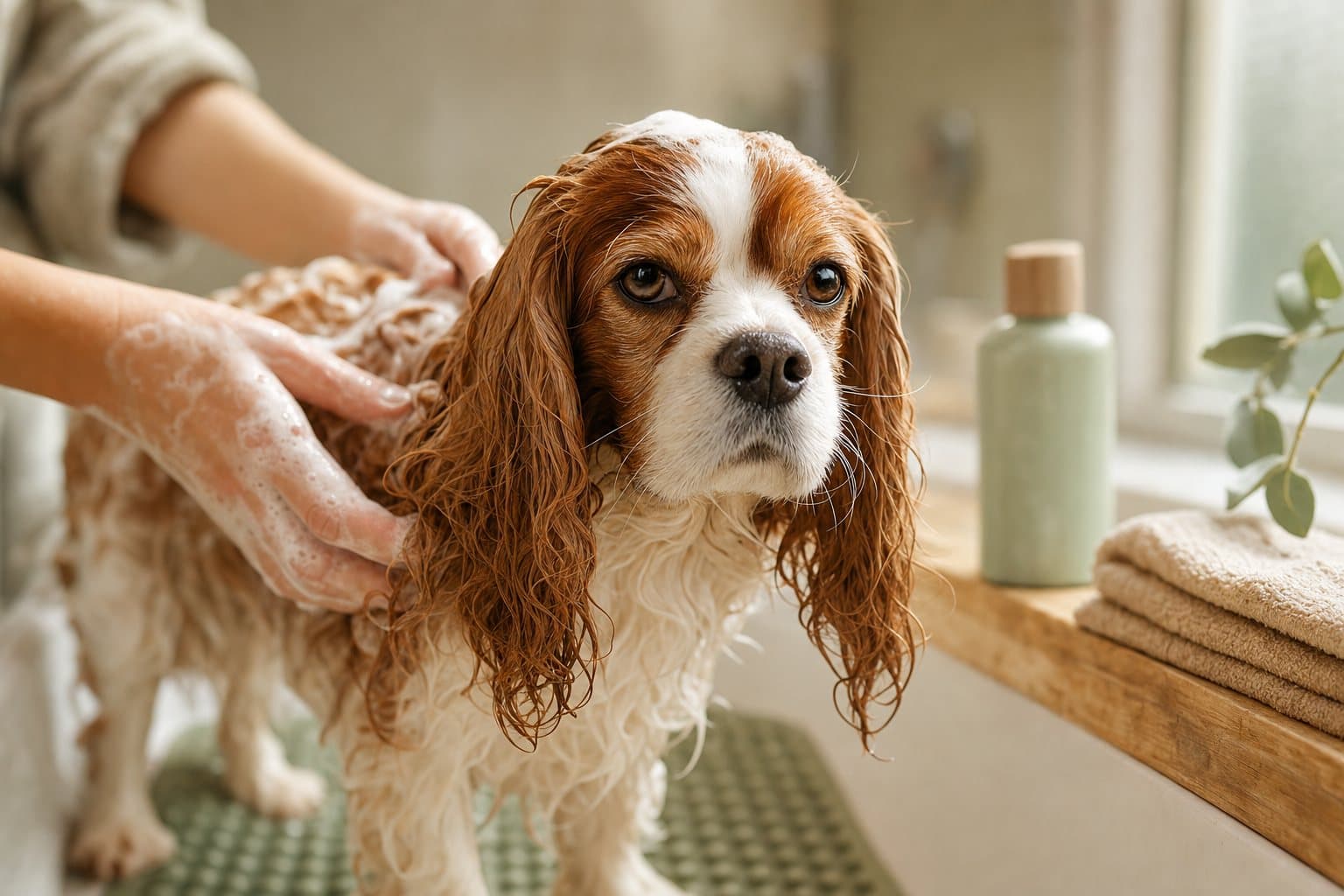
Bathing a dog sounds like one of the simpler grooming tasks – a bit of water, a bit of shampoo, a towel at the end. In practice, especially with breeds that have long, silky coats and drooping ears, such as the Cavalier King Charles Spaniel, a bath can turn into a small logistical operation, and it can become a source of stress for both dog and owner. Do you have trouble bathing your dog? Is it a big source of stress for him, or is it stressful and troublesome for you? If you've ever stood soaked through in the bathroom, holding a squirming dog with one hand and a bottle of shampoo with the other, this article is for you. We've gathered everything worth knowing about bathing a Cavalier and dogs with similar coats: how often to bathe, which products to use, how to bathe step by step, how to dry the coat, what to watch out for with the ears, and – perhaps most importantly – how to turn bath time from something dreaded into a calm moment spent together. We hope that, just like our video, this guide genuinely helps.
Why Bathing a Cavalier Has Its Own Rules
The Cavalier King Charles Spaniel is a breed with a distinctive, silky, medium-length coat and generous "feathering" on the ears, chest, backs of the legs, and tail. This type of coat is beautiful, but it calls for a completely different approach to bathing than short-haired, smooth-coated dogs that need no brushing at all. Before we get into bathing technique itself, it's worth understanding exactly what we're dealing with.
This is also a good moment to remind ourselves why we bathe and groom dogs regularly in the first place. It isn't only about looks or the pleasant smell of a freshly washed coat – though that's certainly a nice side effect. Bathing, and the brushing that goes with it, is also a chance for close contact with your dog, time spent together, and, just as importantly, a chance to routinely check the condition of the skin, ears, and overall wellbeing. In a breed as sociable and attached to its owner as the Cavalier, a calmly and patiently handled bath can become part of building mutual trust, rather than just another item to tick off the grooming list.
Silky Fur and Feathering – Different from Smooth-Coated Dogs
A Cavalier's coat is fine, soft, and long in the "feathered" areas, which means it tangles very easily when wet and rubbed. Wet, unbrushed fur is almost a recipe for mats, especially behind the ears, under the arms, and behind the hind legs. That's why bathing a Cavalier really begins before the bath – with a thorough brushing, which we cover in more detail later in this article.
The Ears – This Breed's Sensitive Point
Long, low-set, densely furred ears are one of the breed's trademarks – and also one of the reasons Cavaliers struggle with ear canal problems more often than dogs with upright ears. Limited airflow inside the ear encourages moisture to build up, which in turn creates an environment where microorganisms can multiply more easily. That's why protecting the ears from getting overly wet, and thoroughly drying them after a bath, isn't a cosmetic detail – it's a meaningful part of preventive health care.
Sensitive Skin and a Tendency Toward Allergies
Some dogs of this breed have skin that's more sensitive than average, with a tendency toward irritation or allergic reactions. That doesn't mean every Cavalier will have skin problems, but it's worth watching how the skin reacts to grooming products and, if in doubt, discussing shampoo choice with a vet – especially if the dog has a history of allergies, dandruff, dryness, or recurring itchiness.
How Often to Bathe a Cavalier (and Dogs with Similar Coats)
The question "how often should I bathe my dog" doesn't have one universal answer – and anyone who promises a rigid, one-size-fits-all schedule is oversimplifying. Bathing frequency depends on several factors at once: the condition of the skin and coat, the dog's activity level, how much time it spends outdoors, in mud or in water, and individual health considerations.
Why Bathing Too Often Can Cause Harm
A dog's skin, like human skin, is covered by a natural layer of lipids that protects it from drying out and becoming irritated. Bathing too frequently, especially with the wrong shampoo, can damage that layer, leading to dryness, itching, and sometimes secondary irritation. It's a bit like human skin after washing too often with a strongly degreasing soap – the effect can be the opposite of what you intended.
Why Bathing Too Rarely Can Cause Harm Too
On the other hand, bathing too rarely on a dog with a long, dense coat encourages dirt, dead undercoat, and sometimes external parasites to build up in places the dog can't reach on its own, such as behind the ears or under the tail. Neglected fur mats more easily, and matting combined with moisture and poor air circulation at the skin can lead to irritation.
What to Look For When Setting a Bathing Rhythm
Rather than sticking to a rigid rule, it helps to go by observation: is the coat starting to smell unpleasant, is it visibly dirty, has the dog come back from a long walk caked in mud, or is an important occasion coming up where you want the coat looking its best? It's also good practice to ask your groomer or the vet who knows your dog what frequency they'd recommend – especially if the dog has skin problems, since the answer can then be very individual and may involve specialised shampoos used at set intervals.
Bathing "just in case", too often, isn't a sign of better care – it often backfires. If you're not sure how often to bathe your particular dog, ask at your next check-up.
Before You Turn On the Water: Getting Ready for the Bath
A good bath begins long before the water runs. A few minutes of preparation can save a great deal of stress – for both dog and owner.
Brushing Before the Bath – A Step You Can't Skip
This is one of the most often overlooked, yet most important rules: a Cavalier's coat should be thoroughly brushed before the bath, not just after. Water and shampoo make hair swell and mat more easily, so even a small, unnoticed tangle can turn into a hard, difficult-to-remove mat once it's been wet. A thorough brushing of the whole body, paying particular attention to the feathering behind the ears, under the arms, in the groin area, and behind the hind legs, should come before every single bath.
Getting the Bathroom and Supplies Ready
Before you get the dog wet, it helps to have on hand: a suitable shampoo (and possibly conditioner), a soft non-slip mat for the tub or shower stall – slipping is one of the main reasons dogs fear baths – several towels, a sponge or bathing mitt, a jug or cup for controlled rinsing, cotton wool or cotton balls to protect the ears, and treats to reward calm behaviour. Preparing everything in advance means you won't have to run for a towel midway through, leaving a wet, stressed dog alone in the tub. It's also worth testing the water temperature with your wrist or the inside of your forearm before filling the tub – that area is more sensitive to temperature than your fingertips, making it easier to judge whether the water is pleasantly lukewarm rather than too hot or too cold for the dog.
Introducing a Puppy to Bathing From the First Weeks
The best time to introduce a dog to bathing is puppyhood – before any negative associations have a chance to form. Start with short, gentle sessions in warm (not hot) water, plenty of praise and treats, gradually extending how long the bath lasts. If you have an adult dog that's never liked baths, that can change too – it takes more patience, but the principles are the same: small steps, positive associations, no rushing.
Older Dogs and Dogs with Joint Problems
Bathing an older dog, or one with joint pain, calls for extra care. Getting in and out of the tub can be difficult and painful for such a dog, so it's worth considering a low entry point, a ramp, or simply physically supporting the dog getting in and out, rather than leaving it to manage alone on a slippery edge. The bath itself should be as short as possible, carried out in a warm room free of draughts, and afterwards the dog should be thoroughly dried before going back into a cooler space. If your dog has a diagnosed joint condition, it's worth asking your vet whether there are any additional recommendations for the bathing technique itself, for example regarding the best position for washing.
Bathing Step by Step
Below we describe how a typical Cavalier bath unfolds, from wetting the coat to rinsing away the last of the suds.
- Place the dog on a non-slip mat in the tub or shower stall, in water that's pleasantly warm to the touch – not too hot, not too cold.
- Protect the ears – gently place a small piece of cotton wool at the entrance to the ear canal (not deep inside) to limit the amount of water getting in.
- Wet the coat gradually, starting from the paws and back, avoiding a direct, strong stream of water aimed at the face and eyes.
- Apply a properly diluted dog shampoo, gently massaging it into the coat and skin – not just on the surface of the hair, but down at the skin itself, where most of the grime collects.
- Wash the area around the muzzle very gently, using a damp sponge or mitt, taking care that shampoo doesn't get into the eyes.
- Rinse the coat thoroughly – this is one of the most important, and most often underrated, steps. Leftover shampoo in the coat can irritate the skin and cause itching.
- If you're using conditioner, particularly recommended for longer feathering, apply it according to the instructions on the label and rinse thoroughly again.
- Gently squeeze excess water out of the coat with your hands before reaching for a towel.
Protecting the Eyes During Bathing
A Cavalier's eyes are large, expressive, and relatively easy to irritate with shampoo. It's best to wash the area around the muzzle and eyes separately, without pouring water directly and forcefully over them – a damp sponge or your hand works better, letting you control how much water flows and in which direction.
Protecting the Ears During Bathing
Besides the cotton wool mentioned above, it's also worth avoiding aiming the water stream directly into the ear flap. After the bath, remove the cotton wool and thoroughly, but gently, dry both the ear flap and the entrance to the ear canal – more on this later in the article.
How Long Should a Bath Take
There's no single rigid answer to how many minutes a bath should take, but in practice it's worth aiming to keep it efficient and not overly long – the longer a dog stands in water, the more likely it is to grow impatient or get cold, especially in a cooler room. A well-organised bath, with products and towels prepared in advance and within reach, usually takes a matter of minutes for the washing and rinsing itself. It's worth moving efficiently, but without the kind of rush a dog might read as nervousness on your part.
Choosing the Right Products for Bathing a Cavalier
A Shampoo Suited to Canine Skin
A dog's skin has a different pH than human skin, which is why shampoos made for people, even gentle baby shampoos, aren't suitable for regular use on dogs – they can dry out and irritate the skin. It's best to choose shampoos made specifically for dogs, ideally matched to the coat type and any skin needs, such as soothing shampoos for sensitive skin, anti-dandruff formulas, or moisturising ones.
Conditioner and Feathering Care
Because of the characteristic feathering, a conditioner used after shampoo can be very helpful – it makes brushing easier after the bath and reduces the risk of new mats forming while the coat dries. It isn't a mandatory step, but in practice it makes ongoing grooming noticeably easier.
When to Reach for a Vet-Recommended Shampoo
If a dog is dealing with skin problems – allergies, a fungal infection, seborrhoea, or another dermatological condition – shampoo choice shouldn't be left to chance. In such cases, a vet may recommend a specific medicated shampoo, with a defined composition and frequency of use, matched to the diagnosis. Using random products "by feel" when there's an existing skin problem may not just fail to help – it can actually make things worse.
What to Look for When Choosing a Product
When choosing a shampoo, the main things to go by are its intended purpose – made for dogs, not a "universal" product or one meant for human hair – and how your dog's skin reacts after use. If a bath is followed by intense itching, redness, or flaking, that's a sign the product may not be well tolerated, and it's worth looking for a gentler alternative or asking your vet for a recommendation. A strong, artificial fragrance isn't a marker of quality – for dogs, whose sense of smell is far more sensitive than ours, intense scent formulations can actually be unpleasant.
Quick Coat Refreshers Between Baths
Waterless foams and sprays, which don't require rinsing, can be handy between full baths – for example after a short, muddy walk, when a full bath isn't really necessary but you want to freshen the coat and remove surface dirt. They don't replace regular bathing or brushing, but they can be a convenient addition to everyday grooming, especially in winter, when more frequent full baths are less practical.
Drying the Coat Step by Step
Drying is just as important a stage as washing itself – a coat that isn't fully dry, especially around the feathering, ears, and skin folds, encourages irritation and unpleasant odour.
Towel or Blow-Dryer?
The best results come from combining both methods: first, thorough drying with a towel, using gentle pressing rather than vigorous rubbing, which could tangle the hair, followed by finishing off with a blow-dryer set to a cool or lukewarm setting. Hot air can be unpleasant for a dog and can dry out the skin, so a lower temperature works better, even if drying takes a little longer.
Brushing While Drying
While drying the coat, it helps to gently brush it at the same time – this is the best moment to prevent hair from matting as it dries. Pay particular attention to the feathering behind the ears, under the arms, and behind the hind legs.
Spots That Are Easy to Forget
Worth checking are the area under the collar, the inner thighs, the spaces between the toes, and – especially important in this breed – the area around the ears. Moisture left in these spots can lead to skin irritation, unpleasant odour, and, in the case of the ears, a higher risk of inflammation.
Ear Care After Bathing
A Cavalier's ears deserve a section of their own, because this is one grooming element that genuinely affects the dog's health, not just its appearance. After every bath, gently dry the outer ear with a soft towel or wipe, and, if your vet has previously recommended it, apply an ear-cleaning product made for dogs, following the instructions you were given. Don't insert cotton buds deep into the ear canal – this can damage it or push debris further in rather than removing it.
If, after a bath, you notice your dog shaking its head, scratching at its ears, an unpleasant smell, redness, or discharge from the ear canal – that's a signal not to wait, and to book a check-up. Untreated ear inflammation can worsen quickly and becomes increasingly painful for the dog.
Turning Bath Time into a Pleasure, Not a Source of Stress
For many dogs, bathing is associated with something unpleasant – the noise of water, slipping, restricted movement. Fortunately, in most cases, this can be changed.
Signs That a Dog Is Stressed
It helps to recognise body language that signals stress: lip licking, yawning unrelated to tiredness, flattened ears, a tucked tail, attempts to escape, trembling, excessive panting. Spotting these signals lets you respond before the stress escalates – slow down, give the dog a short break, lower your voice.
Building Positive Associations
- Start with short sessions and gradually extend them, rather than jumping straight into a full, long bath.
- Use a calm, cheerful tone of voice – dogs are very good at picking up on their owner's tension.
- Reward calm behaviour with treats and praise throughout the bath, not just at the end.
- Get a non-slip mat sorted – many dogs aren't actually afraid of the water itself, just the feeling of sliding on a smooth tub surface.
- Avoid shouting at or punishing the dog for showing fear – that's the surest way to make it permanently associate bathing with something bad.
- Where possible, bathe your dog in similar conditions and at a similar time – predictability is calming.
If, despite your efforts to build positive associations, your dog reacts to bathing with intense fear, trembling, attempts to flee, or aggression, it's worth consulting a behaviourist or a vet. Sometimes intense fear calls for a more structured desensitisation programme, and sometimes veterinary support as well.
Bathing at Home or at a Professional Groomer's
Many owners wonder whether it's better to bathe their dog at home or to rely regularly on a professional groomer. Both options have their advantages, and the choice often depends on available time, household budget, and the individual dog's needs.
The Advantages of Bathing at Home
Bathing at home is convenient, doesn't require booking an appointment in advance, and lets you respond straight away when the dog comes back from a muddy walk. It's also an excellent opportunity to take a good look at the dog's whole body – skin, ears, paws – and catch any changes early. For many dogs, a bath given by a familiar owner, in their own home, is simply less stressful than a visit somewhere unfamiliar.
The Advantages of a Grooming Salon
A professional groomer has equipment and experience that's hard to match at home – stronger yet safe dryers, a wide range of products suited to different coat and skin types, and the skill to handle dogs that are anxious or difficult for one person to wash alone. Regular groomer visits are especially useful for feathering care, sanitary trims, and situations where the coat has been neglected and needs more than just a bath.
A Middle Ground
Many families choose a mixed approach: more frequent baths at home, supplemented by periodic groomer visits, for example for trimming, a thorough ear clean, or removing more stubborn mats. This split keeps the dog clean day to day while still benefiting from professional expertise and equipment where it really makes a difference.
Bathing a Dog Through the Seasons
Bathing in Winter
In winter, thoroughly drying the dog before it goes back outside is especially important – a damp coat combined with low temperatures is a straightforward route to an unpleasant chill. It's also worth making sure the room where you bathe the dog is free of draughts, and that the water is pleasantly warm, not hot.
Bathing in Summer
In summer, after a swim in a lake, river, or the sea, it's worth rinsing the dog with clean water to remove salt, sand, or debris from the natural body of water, which can irritate the skin if left in the coat too long. This is a good moment to judge whether a full shampoo bath is needed too, or whether a rinse and a thorough brushing will do.
Bathing During Shedding Season
During heavy shedding, a bath combined with thorough brushing helps remove dead undercoat more effectively than dry brushing alone. It's worth remembering, though, that the skin can be more sensitive during this period, so it's best to use gentle products and not overdo bathing frequency just because fur is turning up all over the house.
Bathing Dogs with Similar Coats – Not Just Cavaliers
The principles described in this article apply not only to Cavaliers, but also to other breeds with long, silky, or heavily feathered coats – for example other spaniels, setters, or dogs with a similar hair type. For all of these breeds, thorough brushing before the bath, gentle and thorough shampoo rinsing, and careful drying combined with brushing are essential.
Double Coats
Breeds with a dense undercoat and a coarser outer coat, common among many northern breeds, need especially thorough shampoo rinsing – a dense undercoat easily traps product residue, which can lead to irritation if rinsing is treated as an afterthought. Drying this type of coat also usually takes longer, and it's worth being patient so moisture doesn't stay trapped close to the skin.
Curly Coats
Dogs with curly coats, such as poodles, have hair that essentially never stops growing and mats very easily if it isn't regularly clipped and brushed out. For these breeds, a detangling conditioner is practically essential, and the interval between groomer visits usually needs to be shorter than for breeds with straight coats.
Wire and Rough Coats
Breeds with a wiry, rough coat, like many terriers, have quite different needs – here, the key isn't so much frequent washing as regular hand-stripping, i.e. removing dead hair. Bathing too often with an ordinary shampoo can soften the texture of the outer coat, which in these breeds is supposed to stay coarse and wiry to the touch.
Dogs with smooth, short coats, such as many smooth-coated sporting breeds, usually need the simplest routine, with no risk of matting, but the general rules about water temperature, shampoo choice, and protecting the eyes and ears remain universal for every dog, regardless of breed.
The Most Common Mistakes When Bathing a Dog
- Bathing a dog without brushing the coat first.
- Using a shampoo made for people instead of one made for dogs.
- Water that's too hot, uncomfortable for the skin and unpleasant for the dog.
- Rinsing shampoo out incompletely, leading to skin irritation.
- Drying with hot air from a blow-dryer, without controlling the temperature near the dog's skin.
- Skipping ear-drying, which raises the risk of inflammation.
- Punishing a dog for showing fear instead of calm, patient desensitisation.
- Bathing too often "just in case", without an actual need.
When to Consult a Vet or a Groomer
Although bathing is, in most cases, a routine grooming task, there are situations where it's worth seeking a specialist's advice rather than handling things alone:
- persistent redness, itching, or flaking of the skin,
- an unpleasant smell from the ears, head shaking, pain when the ears are touched,
- wounds, abrasions, or suspicious skin changes hidden under the coat,
- recurring mats that are hard to remove despite regular grooming,
- intense, persistent fear of bathing that affects the dog's wellbeing,
- a visible decline in coat condition despite proper grooming.
Grooming as Part of Regular Health Checks
It's worth treating bathing and brushing not just as hygiene tasks, but also as an opportunity to routinely "check over" your dog's body – the skin, ears, eyes, paws, and the area under the tail. Many small changes, such as a new lump under the skin, subtle redness, or a slight change in behaviour when a particular spot is touched, are easier to notice during this kind of routine grooming than during ordinary petting. If anything concerns you, it's always worth mentioning at your next check-up, even if it seems minor.
No amount of home advice is a substitute for an examination by a vet if you suspect a skin problem or an ear infection. An early consultation usually means simpler, quicker treatment than waiting until symptoms get worse.
Frequently Asked Questions
How often should I bathe a Cavalier?
There's no single rigid rule – frequency depends on skin condition, the dog's activity level, and how quickly its coat gets dirty. For many dogs, bathing every few weeks works well, but it's worth working out an individual rhythm with your groomer or vet, especially if your dog has a tendency toward skin issues.
Can I use a shampoo made for people?
We don't recommend it. A dog's skin has a different pH than ours, and shampoos made for human hair can dry it out and irritate it. It's best to use shampoos made specifically for dogs.
My dog is afraid of bathing – what should I do?
Go back to short, positive sessions, reward calm behaviour, make sure you have a non-slip mat, and avoid rushing or punishing signs of fear. If the fear is very strong and doesn't ease despite your efforts, a good next step is to consult a behaviourist or a vet.
Is a blow-dryer safe for a dog?
Yes, as long as you use a cool or lukewarm setting rather than hot air, and keep the dryer a safe distance from the dog's skin. It's also worth watching how the dog reacts to the noise of the device and, if needed, getting it used to the sound gradually.
How do I care for a Cavalier's ears after a bath?
Gently dry the ears with a soft towel or wipe, and if needed, use an ear-cleaning product recommended by a vet. Watch for head shaking, scratching at the ears, or an unpleasant smell or redness – these are signs it's worth consulting a vet.
From what age can I bathe a puppy?
Puppies can gradually be introduced to bathing from the first weeks after coming home, starting with short, gentle sessions in lukewarm water. If you're unsure about the right time and approach for a particular puppy's first bath, it's worth asking your vet about it at the time of the first vaccinations.
Do frequent baths cause mats?
Bathing itself doesn't cause mats – lack of brushing beforehand and incomplete drying without simultaneous brushing do. If the coat is thoroughly brushed before the bath and carefully dried while being brushed at the same time, the risk of mats forming is much lower, regardless of how often the dog is bathed.
Bathing a Cavalier doesn't have to be a source of stress, for the dog or for you. All it takes is a little preparation: thorough brushing before the bath, a well-chosen shampoo, a gentle washing technique that respects the eyes and ears, careful drying combined with brushing, and patience and a positive approach when the dog is afraid. If you have questions about coat care, your dog's skin condition, or notice any concerning signs involving its ears or skin, the team at the Hau-Miau clinic at ul. Siemieńskiego 23 in Warsaw's Ochota district would be glad to help. Book a visit — call +48 22 823 35 63.