Pain, inflammation, swelling, or reduced mobility after an injury or a procedure – this is everyday reality for many of the canine and feline patients we see at our clinic. Alongside conventional pharmacological and surgical treatment, we increasingly turn to supportive methods that can speed up recovery and improve an animal's comfort during treatment. One of these is 3D Pulse Therapy, or magnetotherapy – a service we offer at our clinic using a BIOMAG device. In this article we explain what this therapy involves, how it affects an animal's body, when it's worth considering, what a session actually looks like, what to realistically expect from it, and when it shouldn't be used.
What Is 3D Pulse Therapy (Magnetotherapy)
MAGNETOTHERAPY is a physiotherapy method that uses a variable magnetic field, acting on the body's tissues in a non-invasive and completely painless way. We're now offering this service at our clinic – 3D Pulse Therapy is designed to support our treatment efforts and our patients' recovery, while minimising their stress and pain. We've purchased a BIOMAG device for this purpose, and we'd like to walk you through how it works and when it's worth considering this therapy for your pet.
It's worth stressing straight away that magnetotherapy is a supportive method, not a replacement for the pharmacological or surgical treatment prescribed by a vet. It's an additional tool that, used at the right time and where there are no contraindications, can support an animal's body in the process of recovery – alongside, not instead of, the treatment ordered by the treating vet.
The BIOMAG Device at Our Clinic
The BIOMAG device generates a magnetic field with parameters that the vet adjusts to the individual patient and the aim of the therapy. The animal doesn't experience any discomfort during this – most dogs and cats treat the session as a time to relax, often settling down, and some even fall asleep on the mattress. The equipment itself doesn't make any loud noises and doesn't require any activity from the animal, which is why it tends to work well even for patients who are naturally anxious or reluctant to undergo other procedures at the clinic.
How the Magnetic Field Affects an Animal's Body
The field generated by the Biomag works in two ways:
- The pulses act on the electrical charges of ions in the body's cells, improving cell membrane permeability – which translates into more efficient cellular metabolism, better tissue oxygenation, and more effective elimination of harmful metabolic waste products.
- The pulses regulate the muscle tone of blood vessels, dilating them, while also acting on red blood cells to improve their movement through the blood vessels.
Effects at the Cellular Level
Improved cell membrane permeability means cells exchange nutrients and metabolic waste products with their surroundings more efficiently. In practice, this can support repair processes in tissue affected by inflammation, injury, or in the process of healing a surgical wound. More efficient cellular metabolism also means cells have easier access to the oxygen and nutrients needed for regeneration, while getting rid of their own metabolic by-products more quickly – by-products that, in excess, could hinder healing.
Effects on Circulation and Microcirculation
The dilation of blood vessels and the improved movement of red blood cells translate into better blood supply to the tissue being treated. Better microcirculation means a more efficient delivery of oxygen and nutrients to wherever they're needed, as well as more effective removal of the products of inflammation. This mechanism is, in fact, behind many of the properties of the therapy described further on – from its pain-relieving effect to supporting wound healing.
Magnetotherapy Compared to Other Veterinary Physiotherapy Methods
Magnetotherapy is one of several physiotherapy methods that modern veterinary medicine turns to as a complement to pharmacological and surgical treatment. It's worth knowing where it sits among other, similar methods, so you can have an informed conversation with the vet about what might work best for your particular pet.
Veterinary Physiotherapy in Combined Treatment
More and more veterinary clinics, ours included, offer physiotherapy methods as part of combined treatment – alongside, not instead of, conventional pharmacotherapy or surgical procedures. This approach allows an animal's body to be supported from several directions at once: medication eases pain and inflammation, surgery removes the underlying cause of the problem, and physiotherapy methods such as magnetotherapy support the body's natural regenerative processes during recovery. This kind of multi-pronged treatment plan usually produces better results than relying on a single method alone, though of course not every animal and not every condition needs such a broad approach.
How Magnetotherapy Differs from Other Physiotherapy Methods
Magnetotherapy stands out among other physiotherapy methods above all because it's entirely contact-free and doesn't require any exertion or cooperation from the animal – all your pet needs to do is lie or sit calmly on the mattress for the time set by the vet. That's a considerable advantage for animals that are anxious, in a lot of pain, elderly, or that tolerate touch or more hands-on forms of rehabilitation poorly. Other physiotherapy methods, which require more activity from the animal or direct contact, can be harder to carry out in such cases, and magnetotherapy can serve as a good starting point for further, gradually introduced rehabilitation. Which method, or which combination of methods, will work best for a particular animal is always decided by the treating vet.
Main Therapeutic Properties of the Pulsed Field
According to the manufacturer's description and our own clinical experience, 3D Pulse Therapy shows:
- PAIN-RELIEVING effects
- ANTI-INFLAMMATORY effects
- ANTI-SWELLING effects
- MUSCLE-RELAXING effects
- VASODILATING effects
- DETOXIFYING effects
Pain-Relieving Effect
Reducing the sensation of pain is one of the most commonly cited effects of pulse therapy, particularly valuable for animals dealing with chronic pain, for example linked to degenerative joint disease, but also for patients experiencing pain after an injury or surgical procedure. For many animals that routinely avoid certain movements or positions because of discomfort, regular sessions can bring a noticeable improvement in day-to-day functioning.
Anti-Inflammatory and Anti-Swelling Effect
Supporting the body's natural anti-inflammatory processes and reducing swelling can be especially helpful after injuries, surgical procedures, or with inflammation of the joints and soft tissue. Reducing swelling in an area affected by inflammation or injury can also indirectly reduce pressure on surrounding structures, thereby easing the accompanying pain.
Muscle-Relaxing Effect
Relaxing tense muscles can bring relief to animals with musculoskeletal pain and support rehabilitation after orthopaedic injuries. Muscle tension is often a natural response of the body to pain or discomfort in a given area, so easing it can further support a return to a normal range of movement.
Vasodilating Effect
The dilation of blood vessels and improved microcirculation described above encourage better nourishment and oxygenation of the tissue being treated, which can matter especially in healing processes and in recovery after exertion or injury.
Supporting Detoxification Processes
More efficient cellular metabolism and better circulation help clear accumulated metabolic waste products from tissue, which can support overall recovery of the body, particularly during a period of convalescence.
What a Therapy Session Looks Like at Our Clinic
The therapy is very simple from the point of view of both the owner and the animal itself. The vet sets the appropriate programme, chosen individually for the patient and the aim of the therapy, and your dog or cat sits or lies on a special mattress for a set amount of time. The animal doesn't need to do anything – it requires no cooperation beyond calmly staying on the mattress, which comes entirely naturally to most patients.
The owner doesn't need to do anything either – it's enough to simply accompany your pet during the session. As a nice little bonus, we also offer a parallel "owner therapy" – a special attachment for the device that we can use on you too, while your pet has its own session. We'd suggest bringing a good book along, and we'll treat you to a coffee or tea in the meantime.
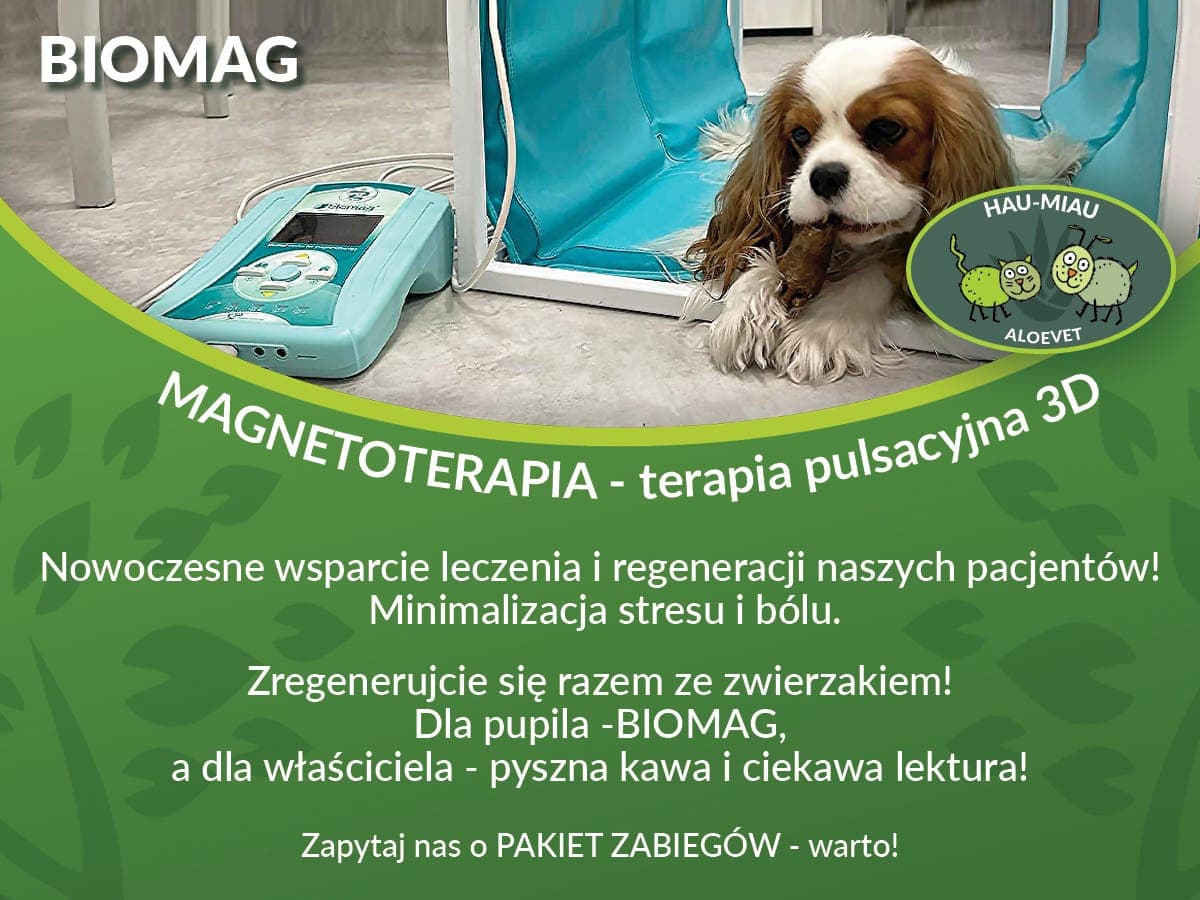
For many animals, a magnetotherapy session becomes, over time, a pleasant, anticipated ritual – especially when it takes place in the calm atmosphere of the clinic with the owner present. It's not unusual for patients who are a little unsure at first to be happily settling onto the mattress by their second or third visit.
What to Expect from Therapy Sessions
Owners bringing their pet for magnetotherapy for the first time often ask what they can expect and how quickly they'll see results. It's worth approaching this with a sensible, realistic mindset.
The Effects Don't Appear Immediately
Magnetotherapy, like most physiotherapy methods, works gradually, by supporting the body's natural regenerative processes, rather than by instantly "switching off" pain or inflammation. That's why a single session rarely brings about a dramatic, immediately visible change – it's more the cumulative effect of successive visits, combined with the rest of the prescribed treatment, that has a chance of translating into a noticeable improvement in an animal's comfort and mobility. Patience and consistency matter here just as much as with any other form of rehabilitation.
Observing Your Pet at Home Between Sessions
It's worth watching your pet at home between visits and sharing your observations with the vet – whether it's moving more freely, getting up more readily, resting for shorter or longer periods, or whether its appetite or mood is changing. These everyday observations from an owner are valuable feedback for the vet, useful when it comes to adjusting the therapy plan if needed.
The Owner's Role Between Sessions
Beyond the visits to the clinic themselves, owners have a role to play at home too – providing the animal with a comfortable, warm place to rest, following any recommendations about physical activity, and consistently giving any medication as instructed by the vet. Pulse therapy works best as part of a coherent care plan, not in isolation from the rest of an animal's everyday health habits.
Magnetotherapy isn't a miracle cure for every health problem – it's a supportive method whose realistic effects appear gradually, and they're best assessed together with the treating vet, rather than judged on the basis of a single session.
How to Prepare Your Pet for a Therapy Session
Is Any Special Preparation Needed
Magnetotherapy doesn't require any special preparation on the part of the animal or the owner. There's no need to fast your pet before the visit, and no need to bathe it or prepare its coat in any particular way. All you need to do is arrive at the appointed time, ideally in a reasonably calm state – if your pet has had a chance to tire itself out a little beforehand, for example with a short walk, it will find it easier to settle calmly on the mattress during the session.
Collars, Harnesses, and Other Accessories During the Session
Ordinary collars, harnesses, or small decorations on the coat don't interfere with the therapy – there's no need to remove them before the session. If your pet is wearing something metal that's larger, though, it's worth asking the clinic's staff whether it would be better to remove it for the duration of the session.
Which Animals Pulse Therapy Is For
Both dogs and cats can benefit from magnetotherapy, regardless of breed or size – the BIOMAG device allows the programme to be adjusted to the individual patient, whether very small or, conversely, large and heavy.
Dogs of All Breeds and Sizes
Both small dog breeds and large, heavy dogs can be candidates for pulse therapy, provided there are no contraindications. In large breeds, which more often struggle with hip or elbow joint conditions, magnetotherapy is sometimes considered as part of long-term care for the musculoskeletal system, alongside weight management and appropriately chosen physical activity.
Cats
Cats, as animals that generally tolerate handling and procedures requiring restraint less well, often cope well with magnetotherapy precisely because it doesn't require any holding or direct contact beyond calmly lying on the mattress. This makes it a well-received option even for cats that find visits to the clinic more stressful than most dogs do.
Indications – When It's Worth Considering Pulse Therapy
Magnetotherapy is sometimes considered as part of a broader treatment plan in many different clinical situations. It's always the vet, though, who decides whether a particular animal is a suitable candidate, after assessing its state of health.
Musculoskeletal and Joint Conditions
Animals with degenerative joint disease, dysplasia, or chronic musculoskeletal complaints often use magnetotherapy as part of a broader treatment plan that also includes pharmacological treatment, weight management, and appropriately chosen physical activity. In older dogs and cats, in whom degenerative joint changes tend to be particularly troublesome, regular sessions can be a valuable addition to everyday care. Similarly, in animals with chronic spinal problems, where movement is limited by pain, magnetotherapy is sometimes considered as part of a long-term management plan, always agreed with the treating vet.
Post-Operative and Post-Injury Recovery
After surgical procedures, particularly orthopaedic ones, and after injuries, pulse therapy is sometimes used to support healing and the return to full mobility, always following consultation with the vet treating the animal. It's especially worth considering when an animal is recovering more slowly than expected, or when an owner would like to support the natural course of recovery with an additional, non-invasive method. In these situations, magnetotherapy usually complements, rather than replaces, the standard post-operative care described by the vet who carried out the procedure – limiting activity, caring for the wound, and attending follow-up visits.
Wound Healing and Soft Tissue Regeneration
Supporting microcirculation and cellular metabolism can encourage wound healing and the regeneration of soft tissue after injuries or procedures. This applies both to surgical wounds and to other soft-tissue damage that needs time to rebuild properly. It's worth remembering, though, that the therapy on its own doesn't replace proper wound care – hygiene, protection from licking, or regular check-ups – it can only support processes that are already taking place in the animal's body.
Senior Animals
Older dogs and cats, in whom chronic pain or reduced mobility tend to occur more often, may benefit from regular pulse therapy sessions tailored individually to their state of health. In elderly animals, where pharmacological treatment is sometimes limited by concurrent conditions (for example of the kidneys or liver), non-drug methods such as magnetotherapy can be a particularly valuable complementary option, always under veterinary supervision. It's worth remembering, though, that senior animals usually have several conditions at once, so qualifying them for therapy requires an especially careful assessment of their overall health, not just their age.
Stress Reduction and Improved Comfort
The session itself, taking place in a calm atmosphere, is a form of relaxation for many animals, which in itself can support their overall wellbeing. For some patients, especially the more anxious ones, regular, calm visits in a familiar setting can also help them grow more comfortable with the clinic itself.
Neurological Conditions and Supporting Movement Rehabilitation
In animals undergoing rehabilitation after neurological problems affecting mobility, magnetotherapy is sometimes considered as one element of a broader improvement programme, carried out under veterinary supervision. The decision to include it in such a programme is always made individually, depending on the type and severity of the neurological problem.
Sporting and Working Animals
Sporting and working dogs, which place intensive demands on their musculoskeletal system, are more prone to overexertion, minor injuries, and chronic muscle tension. In such animals, magnetotherapy is sometimes used preventively, as well as to support recovery after exertion, alongside appropriately structured training, warm-ups, and rest periods.
It's always the vet who decides whether 3D Pulse Therapy is suitable for a particular animal, after assessing its state of health, medical history, and any potential contraindications.
Contraindications to Magnetotherapy
Despite its many benefits, 3D Pulse Therapy isn't suitable for every animal. Before qualifying a pet for therapy, the vet always checks for contraindications. These include:
- Pregnancy
- A pacemaker (fairly rare in our patients)
- Haemorrhagic conditions
- Heat (oestrus)
- Tumours
- Severe spastic conditions
- Feverish conditions
- Obsessive-compulsive disorders
- Hyperthyroidism
- Pain of undetermined origin
- No diagnosis established
- Incompatibility with the treatment method chosen by the specialist in charge
Why These Conditions Rule Out Therapy
Some of the contraindications above stem from caution about the magnetic field's potential effect on the course of a particular physiological or disease process – that's the case with pregnancy, heat, or the presence of a pacemaker. Others follow from the principle that therapy shouldn't be used until the exact cause of symptoms has been established – hence pain of undetermined origin and the absence of a diagnosis appearing on the list. Still others concern situations where there's no certainty that the therapy won't interfere with other treatment already under way – hence the note about incompatibility with the method chosen by the specialist in charge. That's why it's so important for a vet, rather than the owner alone, to always decide whether an animal is suitable for pulse therapy, rather than relying on generally available information or previous experience with a different animal.
Safety of 3D Pulse Therapy
A Non-Invasive, Well-Tolerated Method
Magnetotherapy is a completely non-invasive method – the animal isn't pricked, shaved, or subjected to any procedure that breaks the skin in any way. The magnetic field acts through the skin and coat, without the need for direct contact with tissue. This is one of the reasons the therapy tends to be well tolerated even by animals that are reluctant to undergo other forms of handling or procedures at the clinic. The mattress the animal lies on is comfortable and feels like an ordinary bed, which further lowers the stress associated with the visit itself.
The Role of Ongoing Veterinary Supervision
The safety of pulse therapy rests not only on the non-invasive nature of the method itself, but above all on a thorough qualification of each patient before starting sessions, and on monitoring their response over the course of subsequent visits. That's why the decision to start, continue, or end therapy is always made by the vet, based on the animal's current state of health, rather than solely on a recommendation made weeks or months earlier.
The Magnetic Field as a Supportive Method – The Bigger Picture
The use of a magnetic field as a method to support treatment and rehabilitation has long been part of physiotherapy in the broad sense, for both people and animals. In veterinary medicine, methods of this kind are gaining popularity alongside owners' growing awareness of the possibility of supporting treatment with non-invasive procedures, alongside conventional pharmacotherapy and surgery. At our clinic, we treat magnetotherapy as one element of this broader, complementary offering, available to patients for whom the vet judges it appropriate after an individual assessment of their health.
As with many physiotherapy methods, the effects of magnetotherapy can be difficult to separate clearly from the natural course of healing, the effect of any pharmacological treatment running in parallel, or lifestyle changes introduced for the animal at the same time. That's why, at our clinic, we always take an honest approach to it – treating it as a valuable complement to verified treatment recommended by a vet, rather than as a standalone therapeutic method or a guarantee of any particular result.
Who Sets the Therapy Plan and What Qualification Involves
Before we suggest magnetotherapy, the vet always has a conversation with the owner and, if necessary, carries out a clinical examination of the animal – to make sure none of the contraindications listed above are present, and to establish whether the therapy could genuinely support treatment in that particular case. If your pet already has a diagnosis and is under the care of a vet for another reason – for example an orthopaedic or dermatological one – it's worth asking directly whether magnetotherapy could be a good complement to that treatment. We always make this decision individually, taking the full clinical picture into account, not just the diagnosis alone.
Questions Worth Asking the Vet Before Starting Therapy
Before committing to regular magnetotherapy sessions for your pet, it's worth asking the vet:
- whether therapy has a genuine clinical rationale for your particular animal,
- what the aim of the planned sessions is, and how you'll know the therapy is having an effect,
- whether there are any contraindications given your pet's current state of health,
- how the therapy will be combined with other elements of treatment, if any are already under way,
- what to do if your pet copes badly with the first session.
An open conversation about these points helps set realistic expectations and lets you take an informed part in your pet's treatment.
Do You Need a Referral from Another Vet
No – you can book pulse therapy directly, just like any other visit at our clinic. If your pet is already being treated by another vet, for example an orthopaedic specialist or a neurologist, it's worth letting us know during the qualifying visit, so we can properly align the therapy with the treatment already under way and avoid needlessly duplicating recommendations.
How Long Therapy Takes and How Often It's Used
The number and frequency of sessions depends on the animal's state of health, the type of condition, and its response to treatment so far. There's no single, universal schedule suitable for every patient – the vet draws up an individual therapy plan during the visit, taking into account the goal we're trying to achieve and any contraindications. Over the course of subsequent visits, the vet may modify the therapy plan depending on the effects observed and the animal's response to sessions so far.
How We Assess the Therapy's Effectiveness
We assess the effectiveness of therapy based on several sources of information at once: the vet's observations during subsequent visits, the owner's account of how the animal is functioning at home, and, in some cases, additional follow-up tests, if the therapy is accompanying treatment for a specific diagnosed condition. This multi-pronged assessment helps avoid both stopping a therapy prematurely just as it's starting to work, and continuing it indefinitely without a clear purpose.
Combining Magnetotherapy with Other Treatment Methods
Magnetotherapy combines well with other elements of treatment – pharmacotherapy, weight management, an appropriately chosen diet, or rehabilitation exercises. It's precisely this kind of combination of several complementary methods, chosen individually by the vet, that usually gives the best results in caring for animals with chronic conditions or during recovery.
Frequently Asked Questions
Is 3D Pulse Therapy painful for an animal?
No. The therapy is completely painless and non-invasive. Most animals tolerate sessions well, and many relax during them, even falling asleep on the mattress. The animal doesn't feel any heat, vibration, or any other stimulus that might be associated with discomfort.
How long does a single session last?
The vet decides the length of a session individually, depending on the aim of the therapy, the type of condition, and the animal's response. There's no single fixed duration suitable for every patient, so it's worth confirming the exact schedule during the qualifying visit.
Can I be present during the session?
Yes, the owner usually accompanies their pet throughout the session. It's also a good opportunity to take advantage of the parallel "owner therapy" we offer as a bonus, and to keep an eye on how your pet is responding to successive visits.
Does magnetotherapy replace pharmacological treatment?
No. 3D Pulse Therapy is a supportive method, used alongside the treatment prescribed by the vet, not instead of it. The decision to combine treatment methods is always made by the treating vet, based on the animal's complete clinical picture, and it's the vet who assesses whether and when any pharmacological treatment can potentially be reduced.
Can every animal benefit from the therapy?
Not every animal. There's a list of contraindications – including pregnancy, the presence of a pacemaker, haemorrhagic conditions, tumours, or the absence of an established diagnosis. That's why, before starting therapy, the vet always assesses whether a particular animal qualifies for it, regardless of how well the therapy has been tolerated by other animals.
How often should sessions be repeated?
The frequency of sessions is set individually by the vet, depending on the condition, the aim of the therapy, and the animal's response to sessions so far. The plan can be adjusted during treatment as progress is observed, or isn't.
Is the therapy safe for puppies, kittens, or elderly animals?
The vet decides on qualification for therapy based on the animal's state of health, not solely its age. For both very young and older patients, the decision is made individually, after ruling out contraindications and assessing whether the therapy makes clinical sense in that particular case.
3D Pulse Therapy is one of the methods we use to support treatment and recovery for our patients at the Hau-Miau clinic, always tailored to the individual health situation of a particular animal, and always treated as a complement to, rather than a substitute for, thorough diagnostics and treatment. If you're wondering whether magnetotherapy could help your pet – whether that means supporting recovery, chronic musculoskeletal complaints, or simply wanting to learn more – we're happy to assess this during a visit. Book a visit — call +48 22 823 35 63.